On this page
What should you not do in a kitchen remodel?Mistake 1: Starting without a fixed scope and a reserveMistake 2: Choosing materials without thinking about moistureMistake 3: Hiring on price before checking the contractor and the payment termsMistake 4: Skipping the permit or the inspectionMistake 5: Ordering late and underestimating lead timesHow do you prepare for a kitchen remodel and live through it?What should you check before you sign?Frequently asked questionsKey takeaways
- In Houzz’s 2026 study of 2025 renovations, 25% of homeowners set no budget and 37% of those who did went over it.
- Fix the scope in writing and hold a reserve: This Old House advises about 20% of the budget, and one of its builders 15% to 20%.
- Specify materials for moisture: swelling in particleboard and MDF does not fully reverse when the material dries, and the EPA recommends indoor humidity below 60%.
- Check the license, deposit, permit and lien protections before you compare prices.
- Plan life without a kitchen before demolition: a temporary kitchen, dust barriers and, in a pre-1978 home, a lead-safe certified firm.
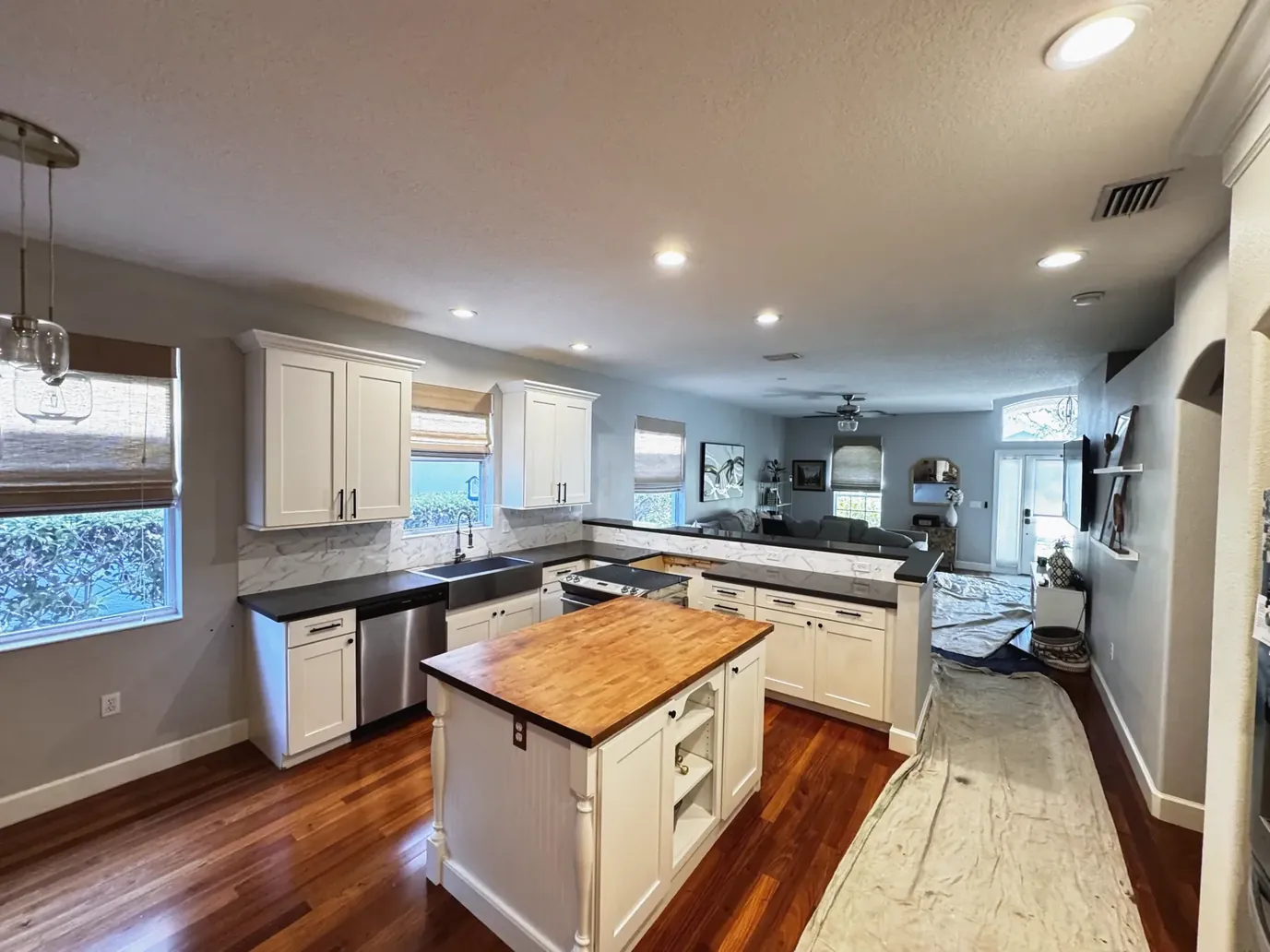
What should you not do in a kitchen remodel?
Do not start without a written scope, a cash reserve, a checked contractor and confirmed order dates. The sections below take these in order, then cover how to live through the work.
Mistake 1: Starting without a fixed scope and a reserve
Put the scope and the budget on paper before you ask for prices, and hold a reserve. In the 2026 Houzz & Home Study, reported by Stacker, 25% of renovating homeowners set no budget and 37% of those who did went over it; the figures cover all renovations, not only kitchens. This Old House advises setting aside about 20% of your budget for unexpected expenses; one of its builders suggests 15% to 20% and calls 10% the bare minimum for older homes. Our guide to budget rules of thumb and how big a reserve to hold compares the published advice.
Choose appliances early, because their specifications drive cabinet openings and electrical load; this is Darvin Kitchen’s recommendation, not This Old House’s. NKBA publishes planning guidelines for aisle widths and clearances; they are recommendations, not code, so ask your designer which edition they use.
Mistake 2: Choosing materials without thinking about moisture
In Florida, specify the cabinet box, the sink base and the fronts for moisture, not only for looks. The Composite Panel Association says particleboard and MDF swell when exposed to high humidity or water and do not fully recover when they dry. The EPA recommends indoor humidity below 60% (ideally 30% to 50%), drying water-damaged items within 24 to 48 hours, and running exhaust fans when cooking or washing dishes, with stoves vented outdoors where possible. Ask what each part is made of and how its edges are sealed.
In a mapped flood zone, FEMA defines a substantial improvement as work costing 50 percent or more of a structure’s market value. Ask your floodplain office whether a large remodel counts and how it adds up costs. Our guide to humid and coastal kitchens covers salt air, flood-rated materials and the 50% test.
Mistake 3: Hiring on price before checking the contractor and the payment terms
Verify the license first, then the contract terms, then compare prices. A contractor without the right license generally cannot enforce the contract in court (s. 489.128). Our guide to choosing a kitchen remodeler covers license checks and bids. Then read the contract for three things.
- Deposit. Florida sets deadlines, not a deposit cap, once the first payment passes 10 percent (s. 489.126); see how Florida’s deposit rule works. Hillsborough County advises paying no more than 10 percent before work starts (other counties differ).
- Written terms. This Old House warns against contractors who demand large upfront payments or will not provide a detailed contract.
- Lien protection. Contracts above $2,500 to improve a home of up to four units must carry a lien notice (s. 713.015). Before final payment the contractor must give you a sworn affidavit saying whether the lienors who sent you a notice to owner have been paid, and you hold the final payment until you have it (s. 713.06(3)(d)). Ask a Florida attorney how this applies to you.
Mistake 4: Skipping the permit or the inspection
Plumbing, wiring and wall changes often need a permit; surface work often does not. Hillsborough County lists cabinet work, floor coverings, painting, shelving and tile as typically cosmetic, and gives the example that a bathroom remodel involving plumbing would likely need a permit. It says a hired contractor obtains the permits, and that work started without one should stop immediately while you ask about an after-the-fact permit. Rules differ by jurisdiction, so see permits in Tampa and Hillsborough County and ask your own building department.
Mistake 5: Ordering late and underestimating lead times
Plan around the supply chain, not only the crew. Houzz’s 2026 study found kitchen projects averaged 9.5 months of planning and 5.8 months of construction nationally, across all scopes. This Old House reports cabinet lead times of 1 to 5 weeks for stock, 5 to 6 for semi-custom and 8 weeks to 6 months for custom. Appliances, stone and permits add their own clocks, and a late change restarts them. Hurricane season runs from June 1 to November 30, peaking September 10 according to the National Hurricane Center, so build in buffer days.
How do you prepare for a kitchen remodel and live through it?
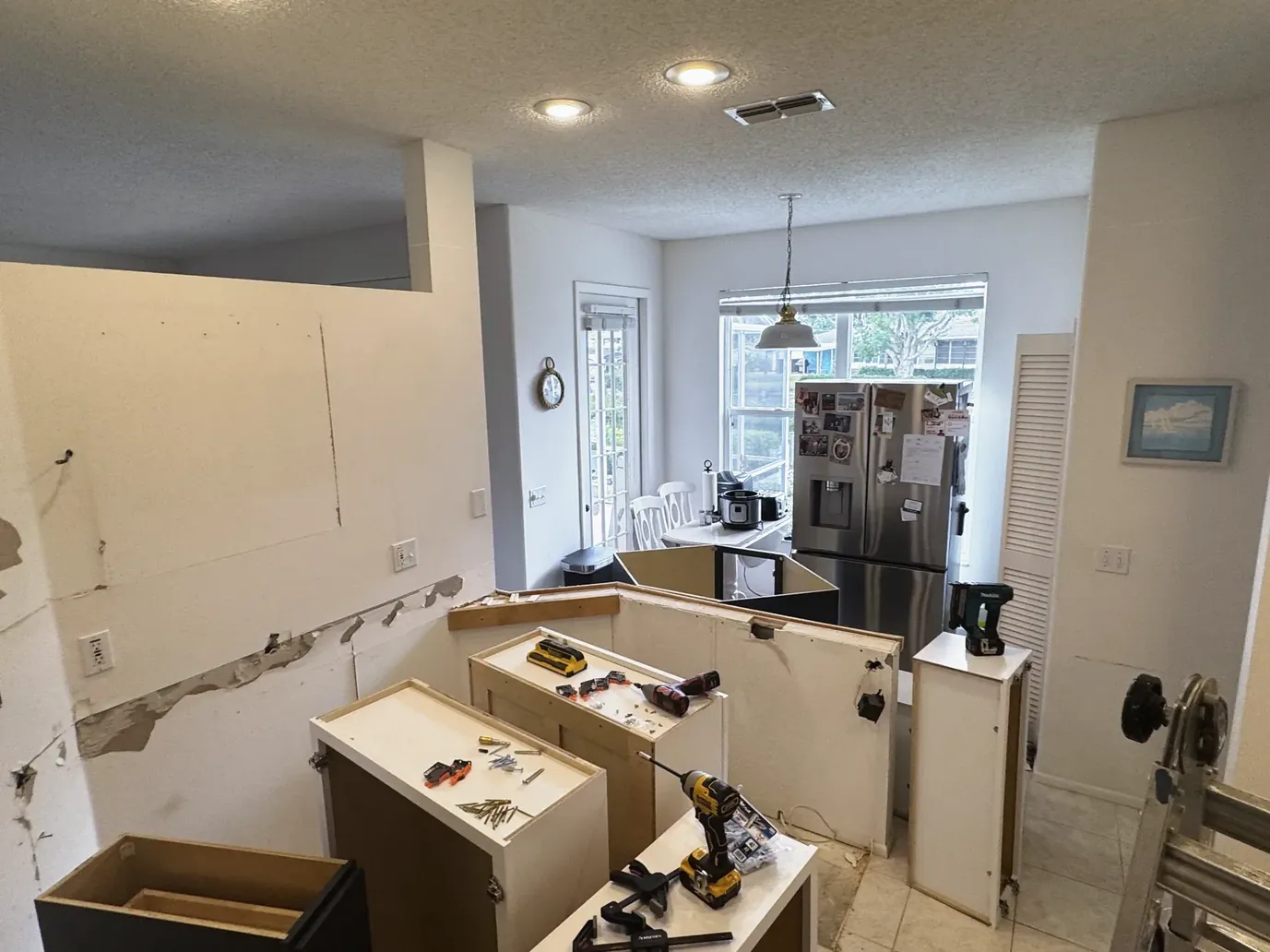
Prepare in the weeks before demolition: build a temporary kitchen, wall off the dust and settle who does what.
- 01
Set up a temporary kitchen
This Old House suggests a microwave, coffee maker and mini-fridge. Decide where you will wash dishes before the sink is disconnected.
- 02
Clear and photograph
Empty the cabinets, move valuables and take dated photos of the kitchen and nearby rooms.
- 03
Block the dust
The EPA describes 6-mil poly sheeting taped over doors and openings, poly over supply and return registers in the work room, and a box fan in a window blowing out. It advises keeping occupants, especially children, away from the work area.
- 04
Check for lead
In a home built before 1978, EPA’s lead-safe rule generally requires firms paid to disturb painted surfaces to be certified, and EPA recommends hiring a certified firm. Ask the firm for its certification.
- 05
Agree on the routine
Ask who will be on site, during which hours, where materials are stored and whom to call about a problem. Write it down.
What should you check before you sign?
Confirm these six items in writing.
- The scope, allowances and exclusions are itemized.
- You hold a reserve of about 20% of the budget (This Old House; one of its builders says 15% to 20%).
- The license is current and matches the business named on the contract.
- The deposit, payment schedule and final-payment affidavit are in writing.
- The contract says who applies for permits and who schedules inspections.
- Cabinet, stone and appliance delivery dates are confirmed in writing.
Living in a condo or an HOA? The association may add its own approval step; see HOA and condo approval for a Florida kitchen remodel.
Frequently asked questions
What should you not do in a kitchen remodel?
Do not start without a written scope and a reserve, hire before checking the license, pay a large deposit or skip a needed permit. In a humid climate, avoid moisture-sensitive materials and late orders.
How do I prepare for a kitchen remodel?
Fix the scope and budget in writing, choose appliances and finishes before ordering, confirm delivery dates, and set up a temporary kitchen and dust barriers before demolition.
How do I survive a kitchen remodel?
Set up a temporary kitchen (This Old House suggests a microwave, coffee maker and mini-fridge), seal the work area as the EPA describes, keep children out of it and agree on a daily routine with your contractor.
How much should I hold in reserve?
About 20% of the budget, according to This Old House; one of its builders suggests 15% to 20% and calls 10% the bare minimum for older homes. Our budget rules of thumb guide compares the other published figures.
Can I stay in my house during a kitchen remodel?
It depends on the scope and your home. The EPA advises keeping occupants, especially children, away from the work area. In a home built before 1978, EPA recommends hiring a lead-safe certified firm; ask your contractor for the dust plan.
Keep reading
 How long does a kitchen remodel take? Phases and what controls the scheduleA kitchen remodel runs on several clocks at once: decisions, permits, manufacturing and site work. Here is the order of the phases and what really…Read more
 How to check a Florida contractor licenseFlorida's licensing portal is public. Here are the steps, the fields to read, and the checks the license search does not do for you.Read more
 Turnkey kitchen remodeling from Venice to TampaCustom cabinetry, stone surfaces and structural remodeling, led by one contractor from the 3D layout to the final inspection.Read more
Sources
- Stacker / Houzz: Renovation nation, 9 home remodeling trends for 2026 (May 12, 2026; 2026 Houzz & Home Study)
- This Old House: The Ultimate Kitchen Remodeling Guide (updated June 5, 2026)
- This Old House: All About Kitchen Cabinets (updated June 2026)
- NKBA: Kitchen & Bath Planning Guidelines (fifth edition overview)
- Composite Panel Association: Dimensional Stability of Particleboard and MDF (Technical Bulletin)
- EPA: A Brief Guide to Mold, Moisture, and Your Home
- EPA: Indoor air quality when remodeling your home (updated June 23, 2026)
- EPA: Renovation, Repair and Painting (RRP) Program
- FEMA glossary: substantial improvement
- NOAA National Hurricane Center: Tropical cyclone climatology
- Florida Statutes 2026, s. 489.126 (moneys received by contractors)
- Florida Statutes 2026, s. 489.128 (contracts by unlicensed contractors)
- Florida Statutes 2026, s. 713.015 (mandatory provisions in direct contracts)
- Florida Statutes 2026, s. 713.06 (liens of persons not in privity; contractor’s affidavit)
- Hillsborough County: Selecting a Contractor
- Hillsborough County: Permits for Homeowners