On this page
What is the difference between a contractor and a general contractor in Florida?What do CGC, CBC and CRC mean, and what is certified versus registered?Which license does a kitchen remodel need?Can a handyman remodel a kitchen in Florida?What happens if someone works without the right license?How do I check what license my contractor holds?Frequently asked questionsKey takeaways
- Florida law defines a contractor as someone who, for compensation, builds, repairs, alters or remodels a building for others. A general contractor is the category whose work is not limited by type.
- The main building categories are general (CGC), building (CBC) and residential (CRC). Plumbing, electrical, roofing and air conditioning have their own licenses.
- Certified licenses work statewide. Registered licenses work only in the local jurisdictions where the holder met local requirements.
- Florida has no handyman license. Casual, minor work priced under $2,500 is exempt, but not when it is part of a larger job or the person advertises as a contractor.
- Unlicensed contracting is against the law in Florida, and an unlicensed contractor cannot enforce the contract. Check the license on the state portal before you sign.
What is the difference between a contractor and a general contractor in Florida?
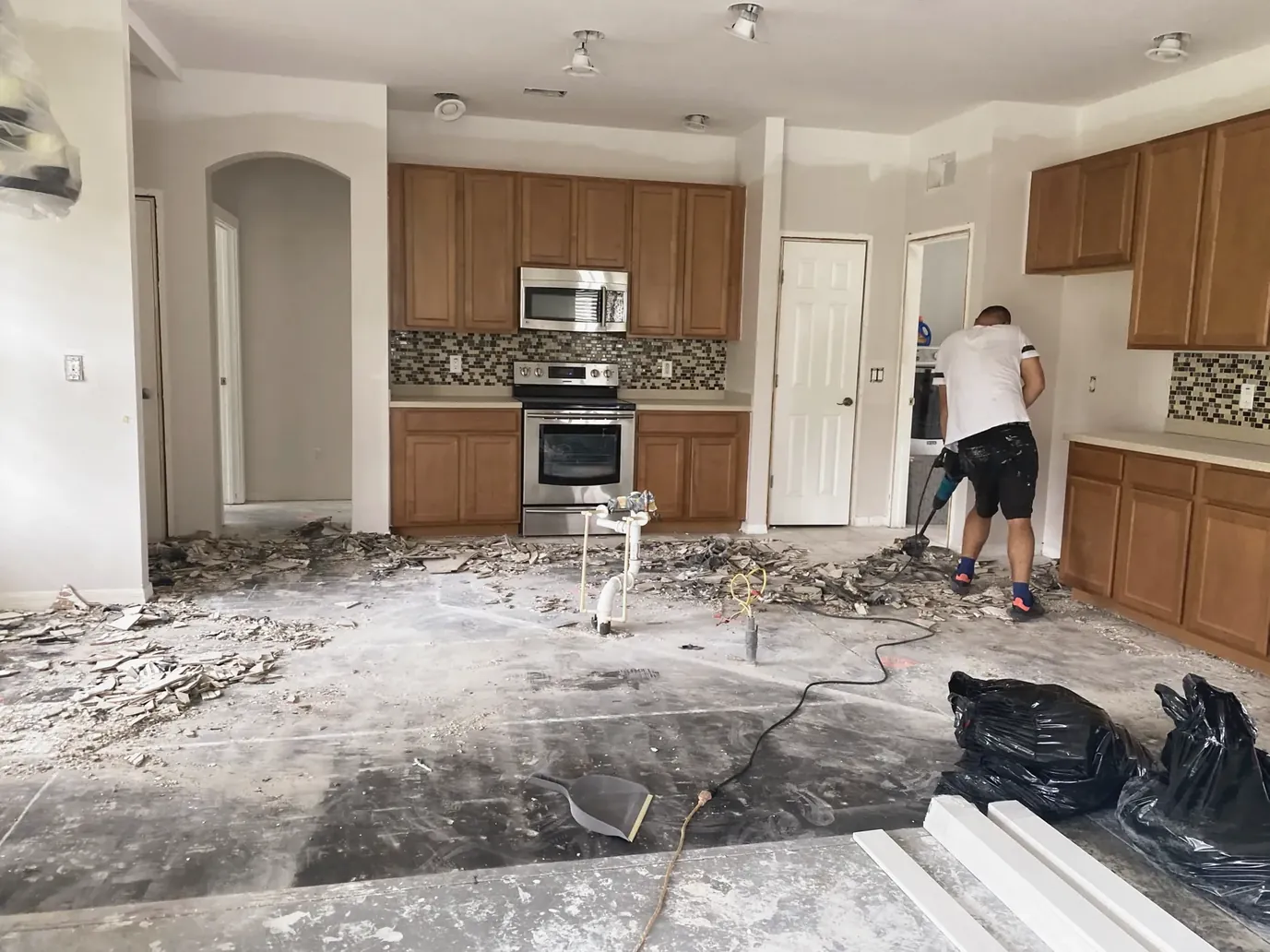
“Contractor” is the legal umbrella term; “general contractor” is the one license category whose work is not limited by type. Under s. 489.105, a contractor is a person who, for compensation, bids or undertakes, or does personally or through others, the construction, repair, alteration, remodeling or improvement of a building or structure for others. A general contractor may contract for any activity that requires a license under the chapter, except as s. 489.113 provides otherwise.
In everyday speech people call whoever runs the job the “GC.” In licensing terms, the useful question is which license category the person holds and whether it covers your work. A contractor may act as prime contractor and subcontract the rest to other licensed contractors (s. 489.113(9)). For how a general contractor charges and what Florida says about deposits, see how a general contractor charges.
What do CGC, CBC and CRC mean, and what is certified versus registered?
CGC, CBC and CRC are the codes for certified general, building and residential contractors; certified means a statewide license, registered means a license tied to specific local jurisdictions. The scope of each is set in s. 489.105(3), and the codes appear in the state’s license-code list.
| License | Codes | What the statute allows |
|---|---|---|
| General contractor | CGC (certified), RG (registered) | Services unlimited as to the type of work; may contract for any activity requiring licensure under the chapter |
| Building contractor | CBC, RB | Commercial buildings and residential buildings up to three stories, plus accessory structures; or remodeling, repair or improvement of any size building if the work does not affect structural members |
| Residential contractor | CRC, RR | Construction, remodeling, repair or improvement of one-, two- or three-family homes up to two habitable stories above no more than one uninhabitable story, plus accessory structures |
A certified contractor holds a certificate of competency from the state and may contract anywhere in Florida without meeting a local jurisdiction’s competency requirements. A registered contractor has registered with the state after meeting the competency requirements of a specific jurisdiction, and may contract only there (s. 489.105(8) and (10)). Working outside the geographic scope of a registration counts as unlicensed activity (s. 489.13). A company is qualified to contract through a qualifying agent who holds the license (s. 489.119).
Which license does a kitchen remodel need?
It depends on what the project touches: structure, plumbing and electrical, or only cabinets, counters and finishes.
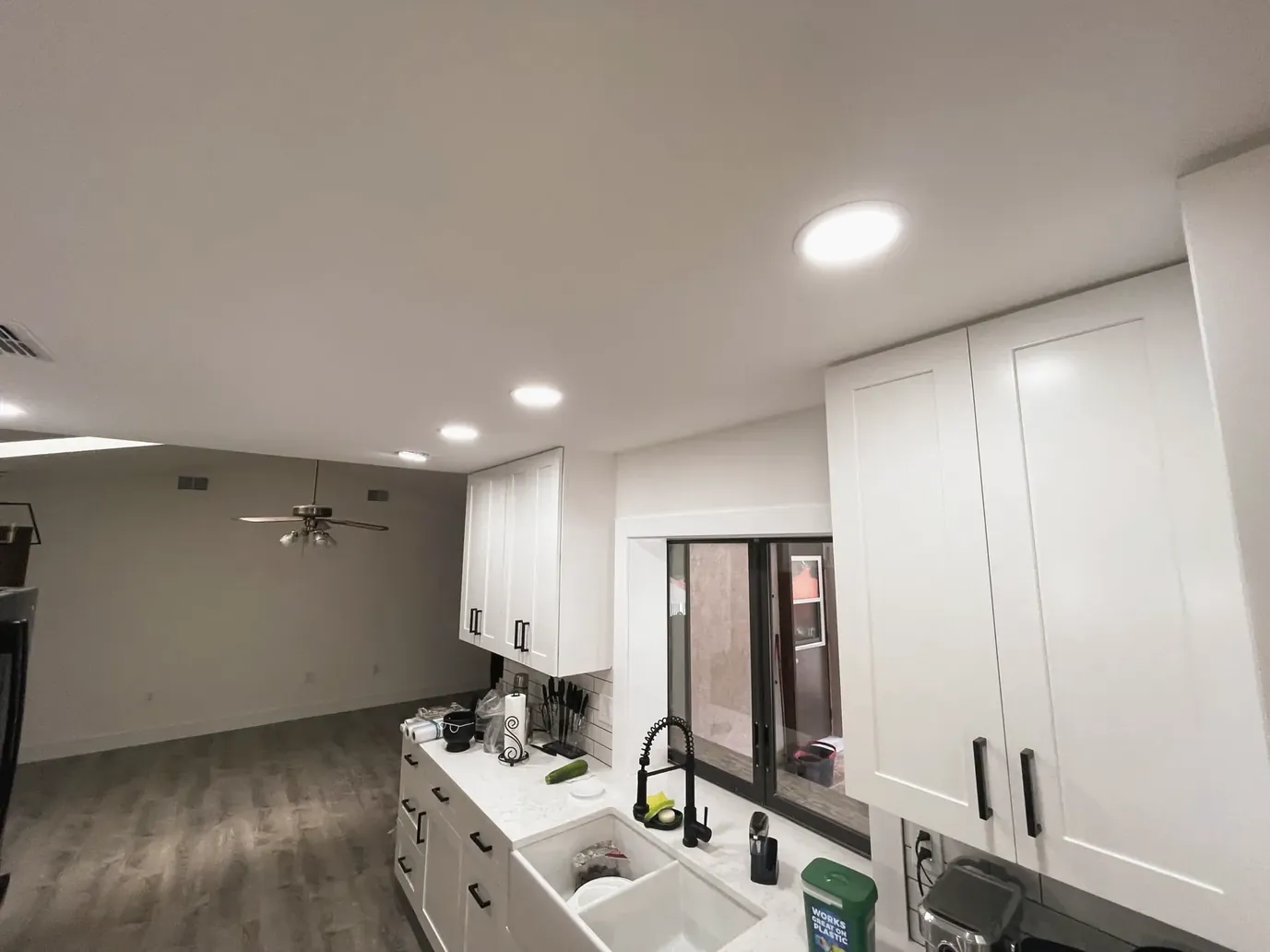
- Structural changes, such as removing a load-bearing wall: a general, building or residential contractor is responsible for structural components (s. 489.113(3)). Compare your building’s height and type with the table above, because only a general contractor’s scope has no building limit.
- Plumbing, electrical, mechanical and air conditioning: a contractor must subcontract this work unless it holds the trade license (s. 489.113(3)). Ask who performs it.
- Cabinets, flooring, painting, tile and stone installation: the statute lists cabinetry, flooring, painting, decorative stone, tile, marble and granite installation, and interior remodeling that includes no task needing a state license among scopes for which a local government may not require a license (s. 489.117(4)). Permit rules still apply, so ask your building department.
A kitchen with new cabinets, stone, moved plumbing and added circuits touches several categories at once, so it is worth asking who the contractor of record is. See what a turnkey kitchen remodel includes and how turnkey kitchen remodeling is organized.
Can a handyman remodel a kitchen in Florida?
Only small jobs. Florida has no handyman license. Work that is minor and priced under $2,500 is exempt; larger or structural jobs are not. The exemption in s. 489.103(9) applies when the total for labor, materials and all other items is under $2,500. It does not apply if the work is part of a larger operation, if a job is split into smaller contracts to avoid the limit, or if the person advertises as a contractor or says they are qualified to contract.
That exemption sits in Part I of the chapter. Electrical and alarm system contracting is regulated separately, and its exemption list has no $2,500 minor-work exemption. A kitchen with new cabinets, counters, plumbing and electrical will likely exceed $2,500 and involve licensed scopes anyway. Separately, starting work that needs a building permit without the permit in effect is a prohibited act (s. 489.127(1)).
Owners have another route: Florida lets you act as your own contractor on your own one- or two-family home if it is not offered for sale or lease, but you must supervise on site and sign the permit application in person (s. 489.103(7)).
How do the $2,500, $7,500 and $15,000 thresholds differ?
Three different dollar figures appear in Florida rules for home projects, and they govern different things; none is permission under another. The licensing exemption above is separate from the permit rules. Florida also requires local governments to exempt some owner work valued under $7,500 from the building permit requirement (s. 553.79), but not electrical, plumbing, structural, mechanical or gas work or work in a flood hazard area, and that exemption does not change who needs a contractor license. See permits in Tampa and Hillsborough County.
| Amount | What it controls | Statutes |
|---|---|---|
| $2,500 | Minor-work licensing exemption. Also the line above which residential contracts need recovery fund and lien notices | ss. 489.103(9), 489.1425, 713.015 |
| $7,500 | Some owner work is exempt from the building permit. Does not affect licensing | s. 553.79 |
| $15,000 | A 5-business-day review window for certain permit applications. Not an exemption (see the timeline guide) | s. 553.792 |
What happens if someone works without the right license?
Unlicensed contracting is against the law in Florida, and the unlicensed contractor cannot enforce the contract. Penalties include criminal charges, fines and stop-work orders (ss. 489.127 and 489.13); the statutes set the details.
- Contracts entered into by an unlicensed contractor are unenforceable by that contractor (s. 489.128).
- A local building department may not issue a building permit to someone acting as a contractor without an active certificate or registration in the right category (s. 489.13).
- A local business tax receipt is not a contractor license, and an inactive or suspended license counts as unlicensed.
- The Homeowners’ Construction Recovery Fund covers losses from specified violations by licensed contractors, not unlicensed ones (ss. 489.1425, 489.13).
How do I check what license my contractor holds?
Search the state licensing portal by name or license number, then confirm the type, the status and the business name against your contract. This list is the short version; our guide to checking a Florida contractor license has the full steps.
- Search by name or license number on the Department of Business and Professional Regulation (DBPR) license portal.
- Confirm the license type covers your work: CGC, CBC or CRC for building scopes, and separate trade licenses for plumbing, mechanical or air-conditioning work.
- Confirm the status is current and active, and that any registered license covers your jurisdiction.
- Match the business: the company on your contract should be the business the qualifying agent qualifies.
- Read the contract. Residential contracts above $2,500 must carry the recovery fund notice and the lien notice (ss. 489.1425 and 713.015). Our cost guide explains how to compare scopes.
Frequently asked questions
What is the difference between a contractor and a general contractor?
“Contractor” is the broad legal term for someone who builds, repairs, alters or remodels for compensation. A general contractor is the license category whose services are not limited by type of work. Building and residential contractors have narrower scopes, and trades such as plumbing and electrical have their own licenses.
Do I need a general contractor to remodel my kitchen in Florida?
Not always, but you need the right license for each scope. Structural work calls for a general, building or residential contractor; plumbing, electrical and mechanical work must be done by contractors licensed in those trades. Cabinet, flooring, painting and tile work is listed among scopes local governments may not require a license for. Owners may also act as their own contractor on their own home under conditions.
Is a CRC the same as a CGC?
No. A certified residential contractor (CRC) is limited to one-, two- and three-family homes of up to two habitable stories above one uninhabitable story. A certified general contractor (CGC) has no limit on type of work.
Can a handyman do plumbing or electrical work?
Florida has no handyman license. Electrical and alarm work is regulated separately and has no $2,500 exemption. For plumbing and other trades, ask your local building department before hiring anyone who is not licensed.
What happens if I hire an unlicensed contractor?
Unlicensed contracting is against the law, the unlicensed contractor cannot enforce the contract, building departments may not issue permits to them, and the state recovery fund does not cover unlicensed contractors. Check the license before you sign.
Keep reading
 How to check a Florida contractor licenseFlorida's licensing portal is public. Here are the steps, the fields to read, and the checks the license search does not do for you.Read more
 What is a turnkey kitchen remodel?A turnkey kitchen remodel is a project in which one company is responsible for delivering the finished kitchen, usually under a single contract. Here…Read more
 Do you need a permit to remodel a kitchen in Tampa and Hillsborough County?Usually yes, if the work touches plumbing, wiring, gas, ventilation or walls. Finish-only work usually does not. Here is what the City of Tampa and…Read more
Sources
- Florida Statutes 2026, s. 489.105 (definitions: contractor, general, building and residential contractors, certified and registered)
- Florida Statutes 2026, s. 489.113 (prime contractors; subcontracting licensed trades)
- Florida Statutes 2026, s. 489.103 (exemptions: minor work under $2,500; owner-builder)
- Florida Statutes 2026, s. 489.117 (registration; job scopes local governments may not license)
- Florida Statutes 2026, s. 489.119 (business organizations; qualifying agents)
- Florida Statutes 2026, s. 489.127 (prohibitions; penalties)
- Florida Statutes 2026, s. 489.128 (contracts by unlicensed contractors unenforceable)
- Florida Statutes 2026, s. 489.13 (unlicensed contracting; fines; permits)
- Florida Statutes 2026, s. 489.1425 (recovery fund notice in contracts)
- Florida Statutes 2026, s. 713.015 (mandatory lien notice in direct contracts)
- Florida Statutes 2026, Chapter 489, entire chapter (Part II electrical exemptions, s. 489.503)
- Florida DBPR: license search portal
- Florida DBPR: Understanding DBPR codes (license codes CBC, CGC, CRC, RB, RG, RR; archived copy, May 2026)