





























Daily care for quartz
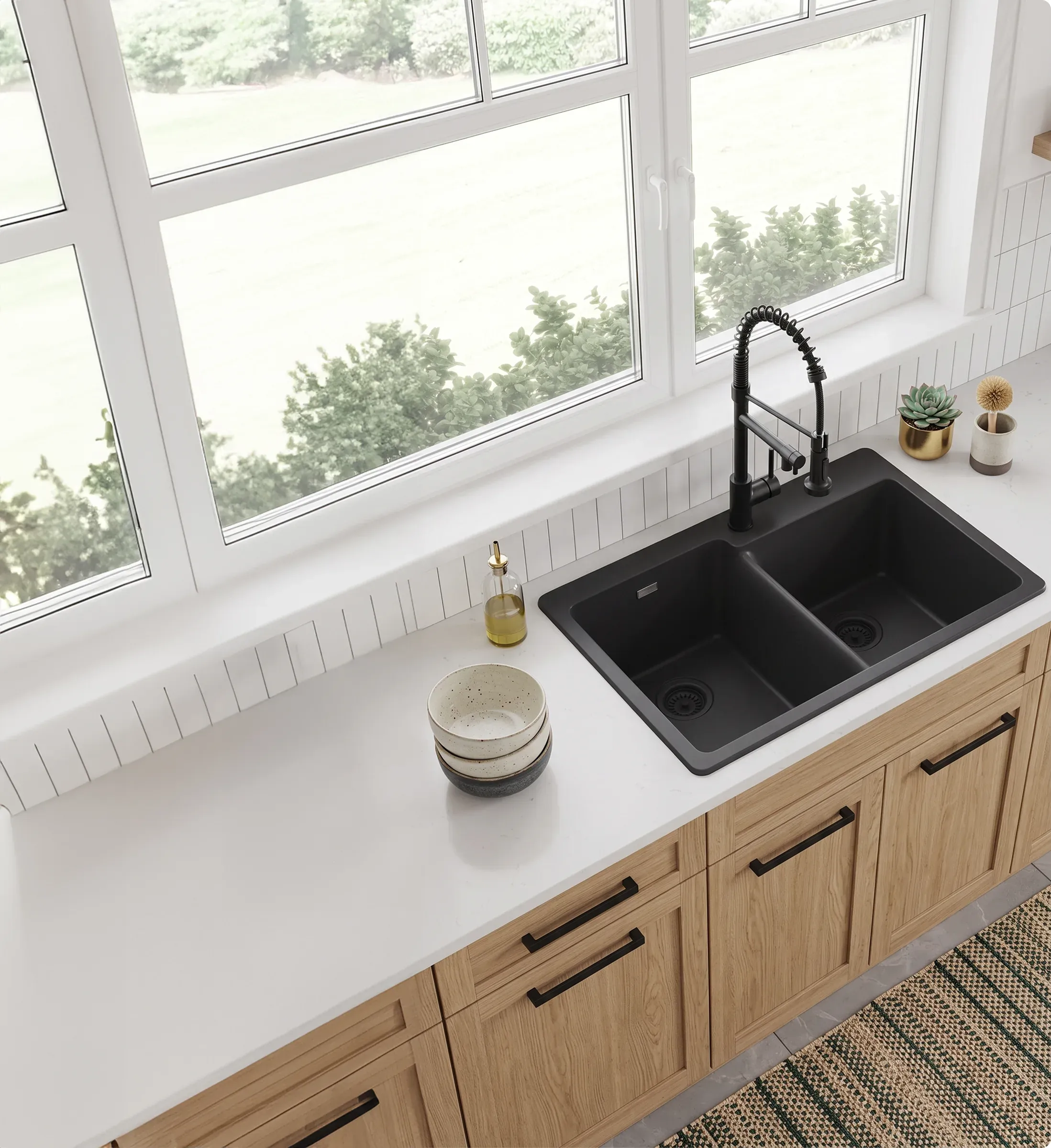
Daily care is a damp cloth, plus a mild nonbleach cleanser when needed. Consumer Reports says to avoid bleach. One U.S. supplier’s care guide also rules out abrasive powders and green or red scouring pads, and warns against drain cleaners, paint strippers and any cleaner with a very high or low pH, which can etch or discolor the surface. Consumer Reports adds that dropping a heavy object, such as a cast-iron pan, could chip or crack it. The same supplier calls for a trivet under hot cookware, because the resin is the weak point.
What to check on your sample
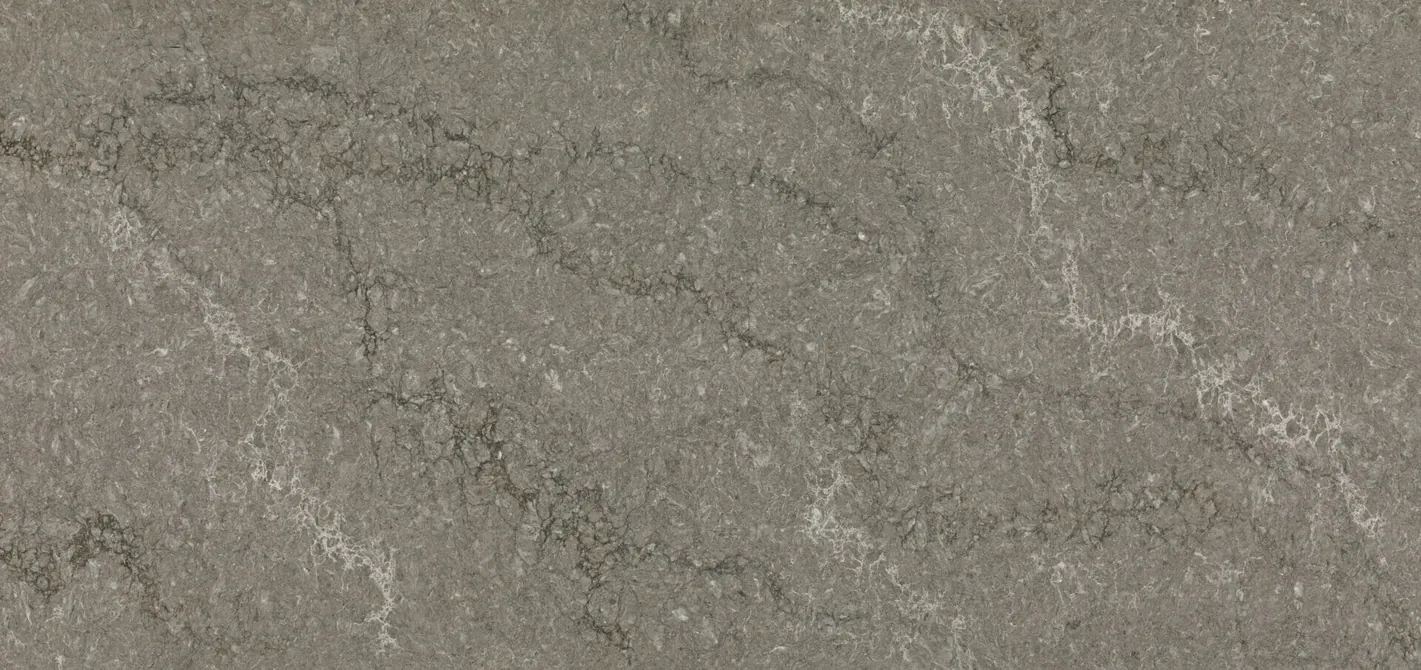
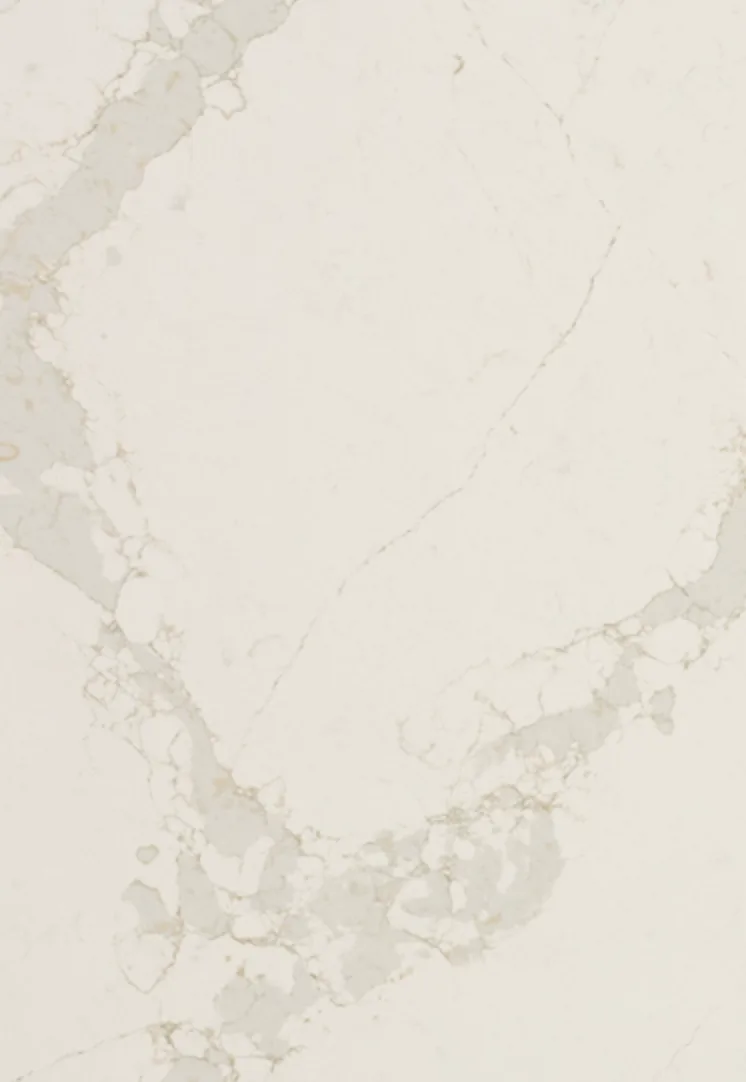
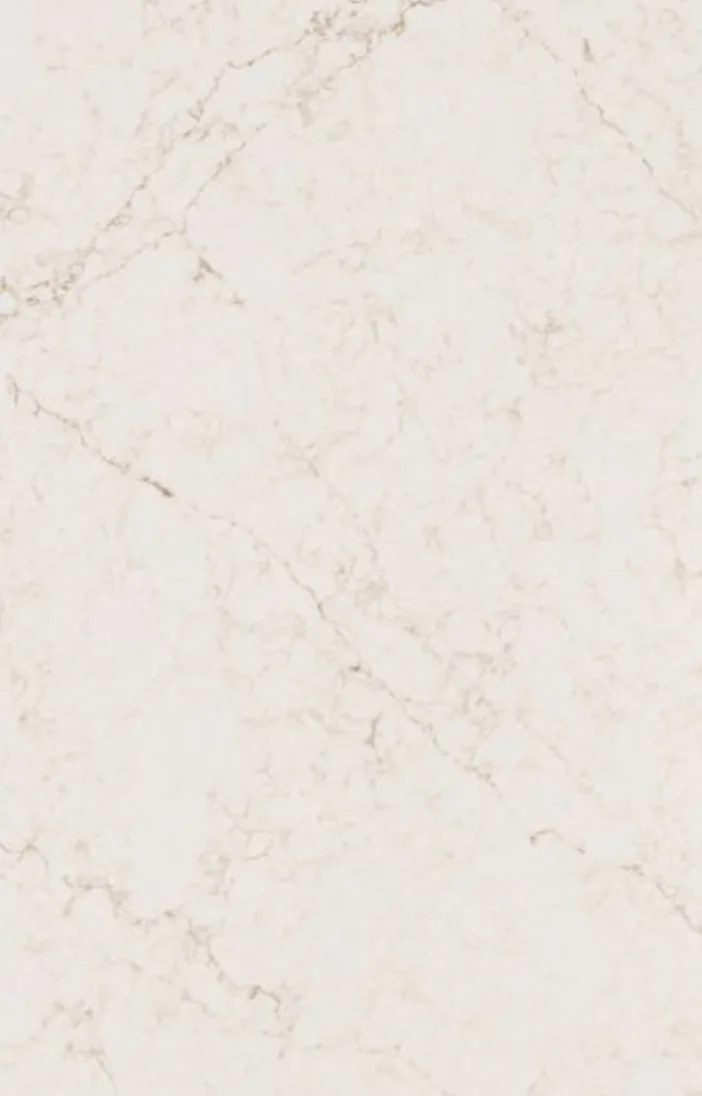
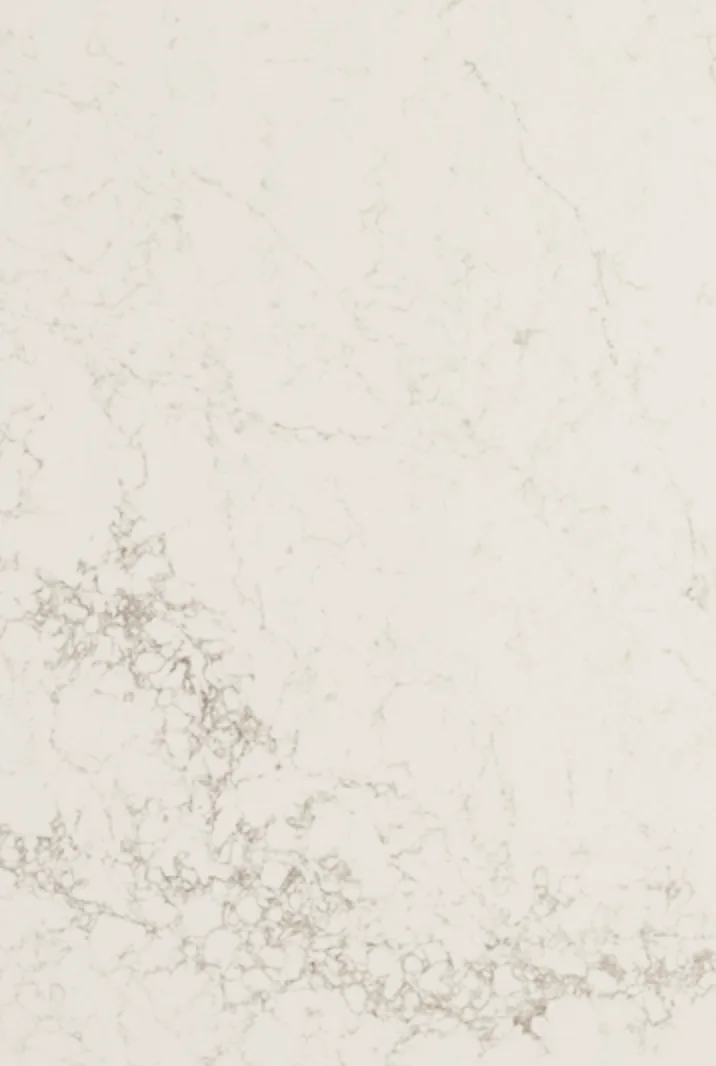
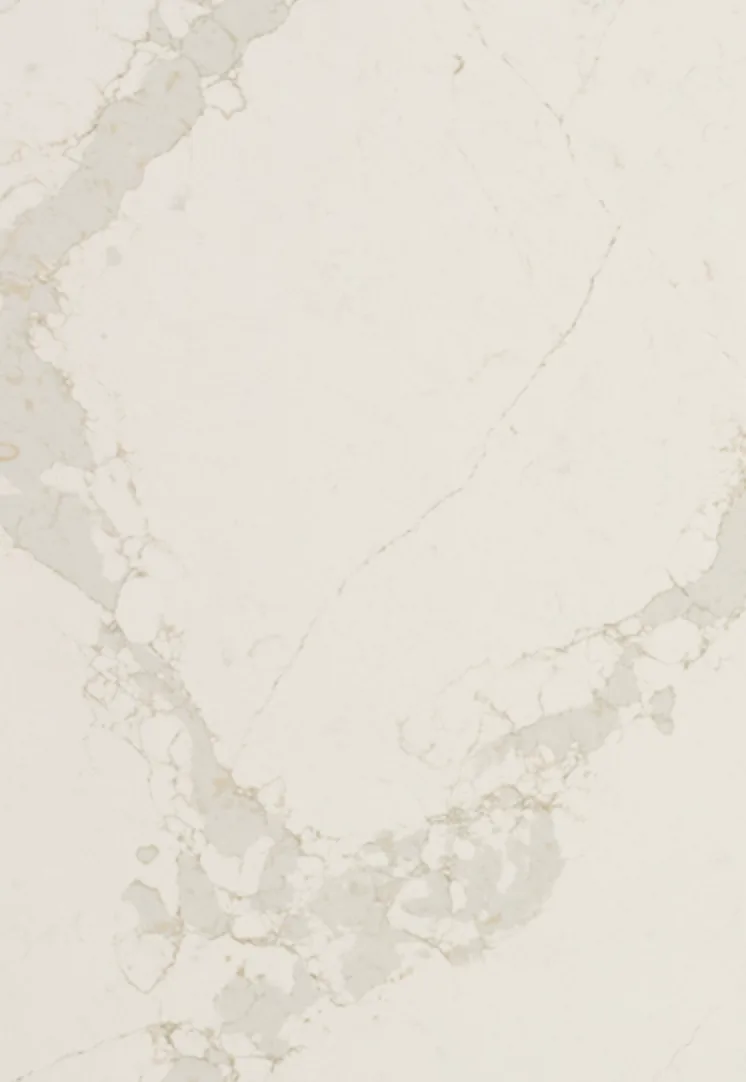
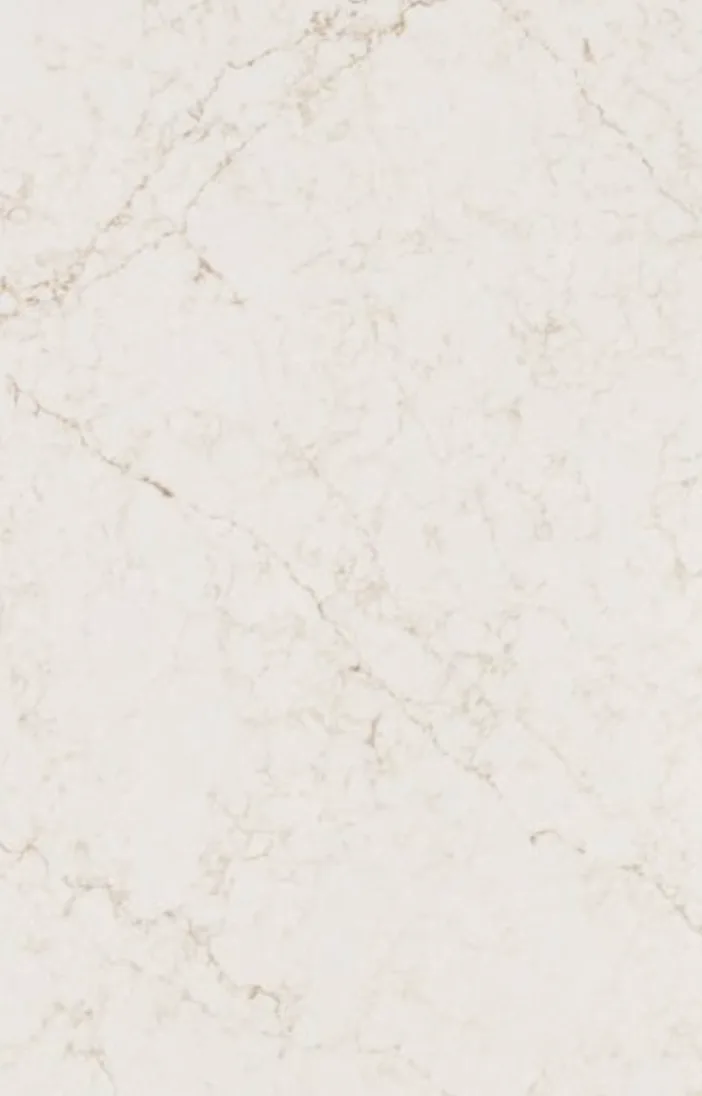
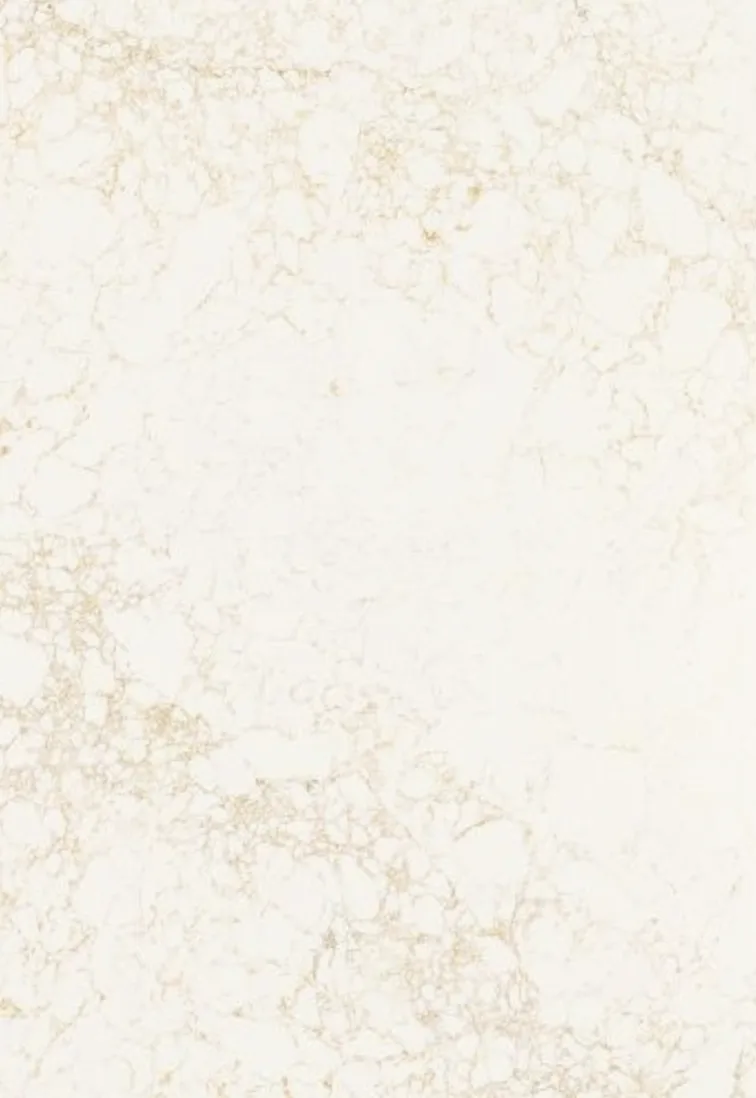
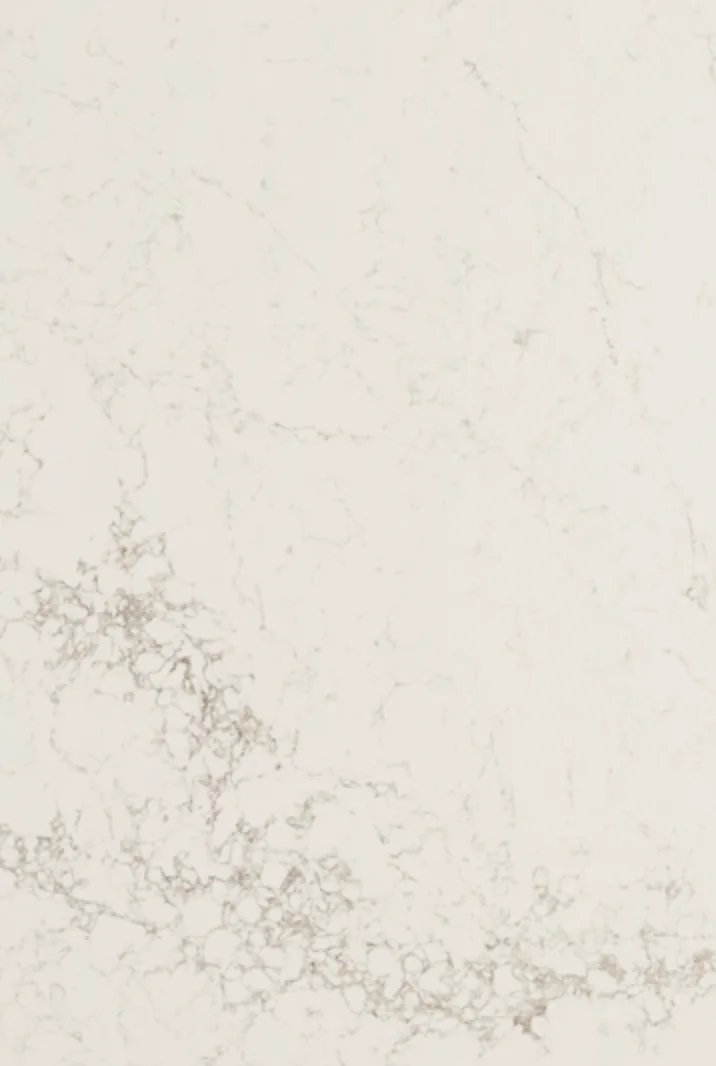
Judge quartz on a full-size sample, in your kitchen’s light, before you approve it. Look at three things:
- The edge. Edges and corners are where quartz chips. Consumer Reports’ buying guide says only a pro can repair a chipped edge, while its care guide mentions repair kits for small chips, so ask your fabricator what they recommend for your color. Rounded edges are safer than square ones, so ask to see the profile on a sample.
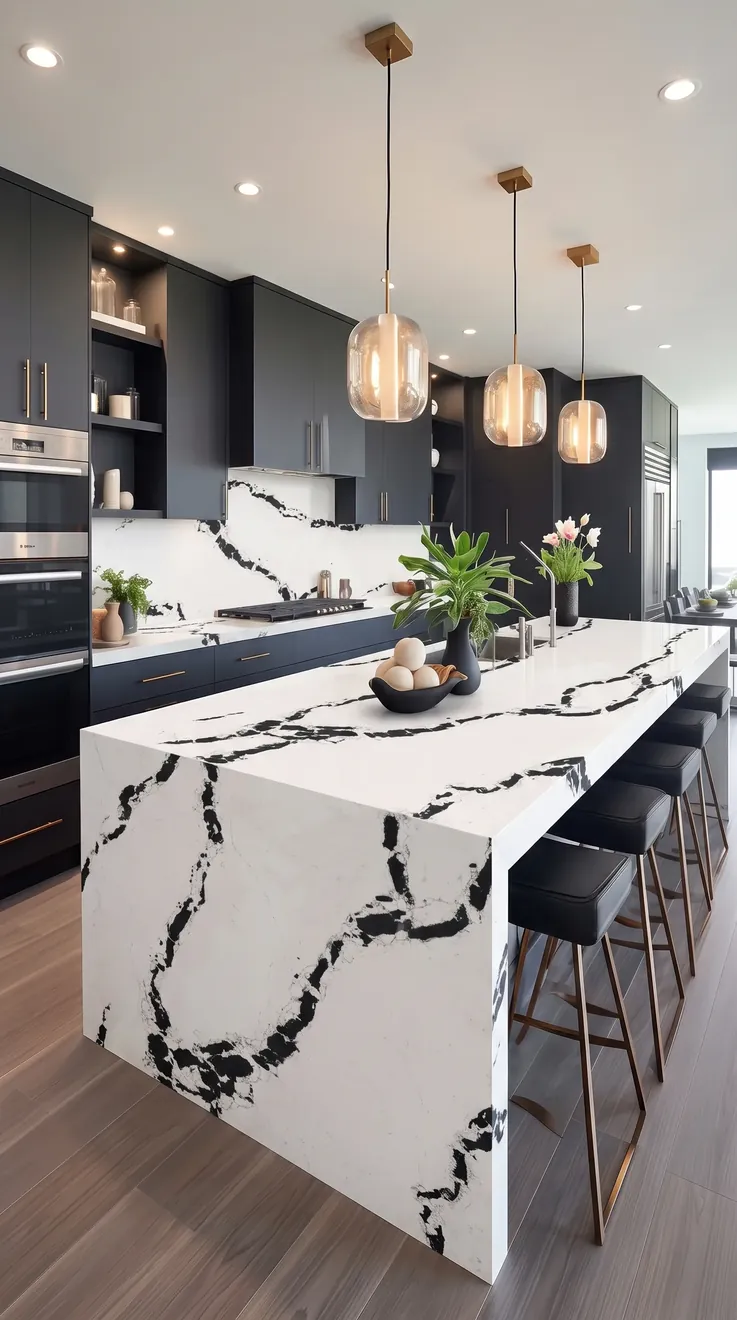
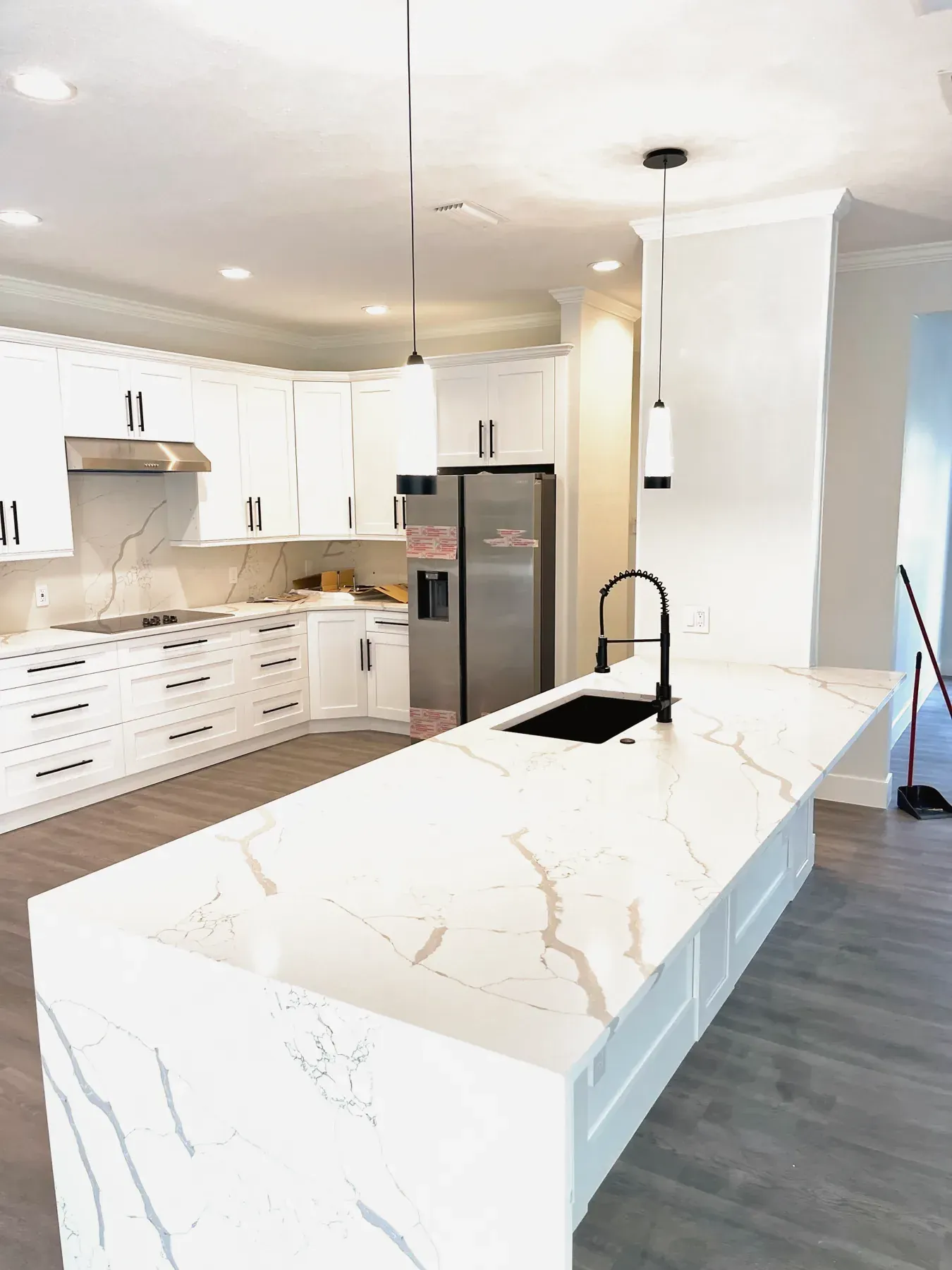
- The seams. Supplier guidance notes that large or complex kitchens can need them, and that bold, veined patterns show them more than dark, speckled ones. Ask for a layout drawing that shows each seam relative to the sink and cooktop.
- The sun. Supplier guidance says the resin may yellow or fade with prolonged direct sun. For a lanai or a sun-washed run, compare porcelain.
Heat, seams, edges and sun are covered in more depth in quartz downsides and alternatives. This page gives no prices; for published per-square-foot estimates, see what quartz costs per square foot.
Silica and your color
Crystalline silica content varies by product, so ask for the manufacturer’s safety data sheet (SDS) for your exact color. According to AIHA’s summary of the OSHA and NIOSH alert, it ranges from under 0.2% in some products to over 90% in some countertop materials. A label or an asterisk is not a substitute for the SDS. Our silica guide explains what to look for.
Frequently asked questions
Can I use quartz in a sunroom or outdoor kitchen?
Supplier guidance advises against it, because the resin may yellow or fade under prolonged direct sun. Some porcelain slabs are rated for outdoor use; ask for the manufacturer’s rating for your exact color.
Can a chipped quartz edge be repaired?
Sources differ. Consumer Reports’ buying guide says only a pro can repair a chipped edge, while its care guide mentions repair kits for small chips. Ask your fabricator what they recommend for your color, and which edge profile lowers the risk.
Is quartz silica-free?
Not by default. Engineered quartz is crushed natural quartz bound with resin, and silica content depends on the product. If a color is labeled silica-free, ask for the manufacturer’s SDS and for what any footnote means.
Keep reading
 Porcelain countertopsLarge-format porcelain countertop surfaces for kitchens in Southwest Florida. Browse the colors.Read more
 Mineral surfacesA next-generation surface made from advanced natural minerals. Explore the colors.Read more
 Quartz countertop downsides: and what to consider insteadQuartz is still widely chosen, but it has real trade-offs. Here is what published sources say about heat, sun, seams, edges, cost and silica, and how…Read more
 Porcelain vs quartz vs other countertops: what about silica?Crystalline silica is mainly a worker-safety issue that starts in the fabrication shop. Here is what OSHA and NIOSH say about each material, and what…Read moreQuartz countertop cost per square foot: what published estimates sayPublished national estimates put quartz at roughly $50 to $200 per square foot, and sources define “installed” differently. Here is what moves that…Read more
 Kitchens in humid and coastal Florida homes: what salt and moisture doHumidity, salt and storm water each stress a kitchen in a different place. Here is where they hit, and how to choose materials that hold up.Read more
Sources
- Consumer Reports: How to clean and maintain countertops
- Consumer Reports: Countertop buying guide (lab tests of 14 materials)
- Quartz care guide from a U.S. stone supplier (an example from another company; always use the care sheet for your own product)
- Quartz pros and cons post from a U.S. stone supplier (sun, heat, seams; an example from another company)
- AIHA: OSHA, NIOSH urge countertop fabrication shops to adopt silica controls (summary of the 2026 alert)
- OSHA and NIOSH Hazard Alert: Worker Exposure to Silica during Countertop Manufacturing, Finishing, and Installation (NIOSH Publication 2026-101, updated Feb. 26, 2026)