


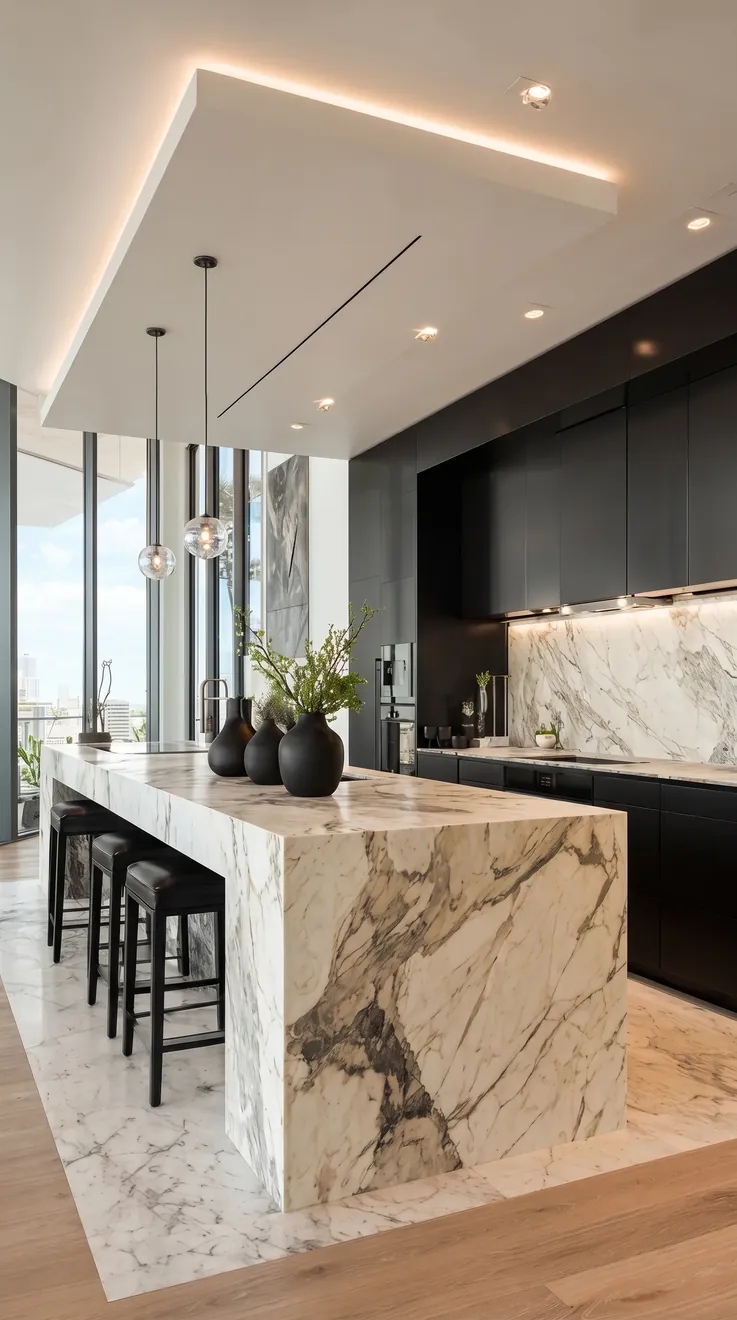
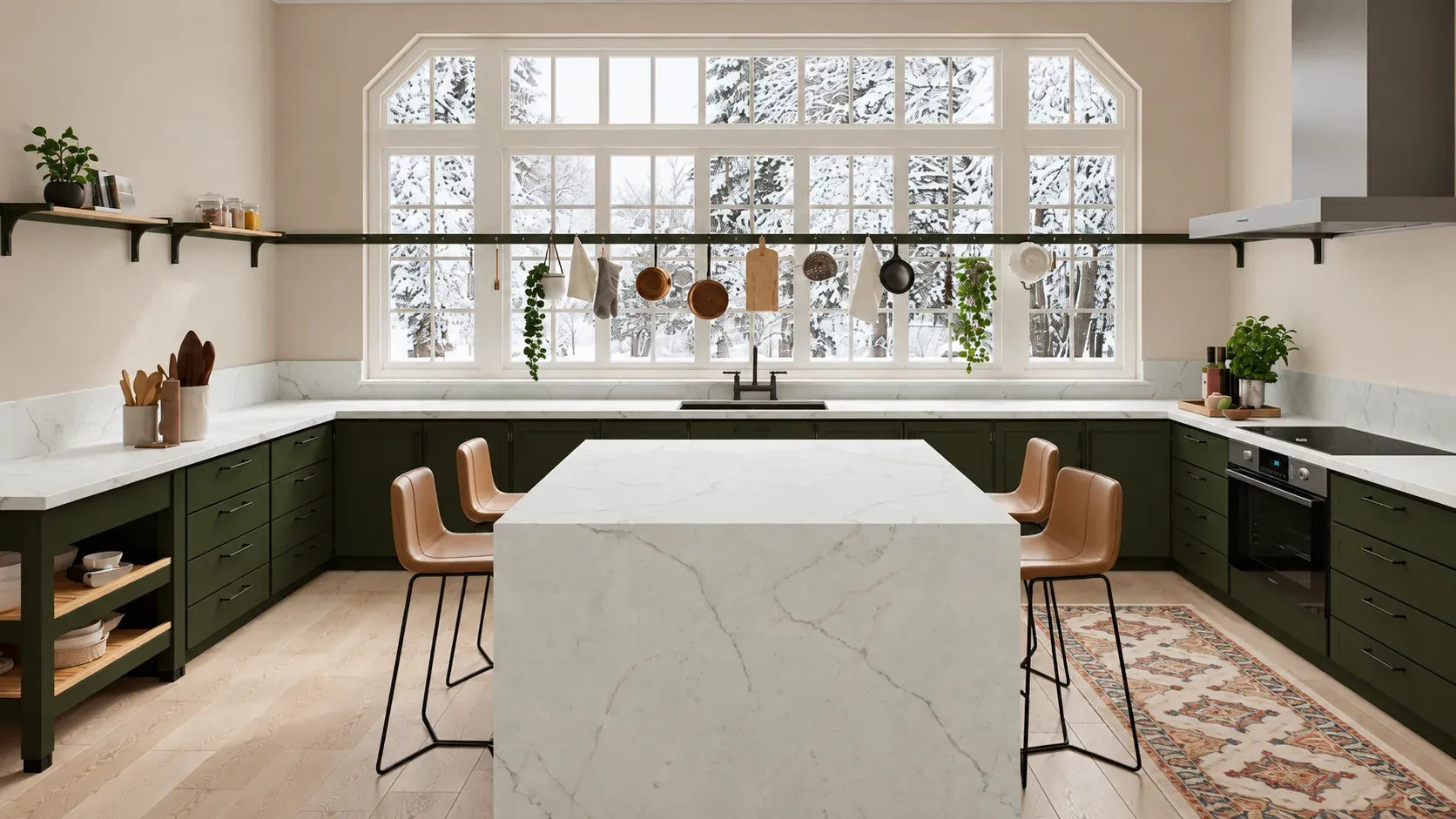



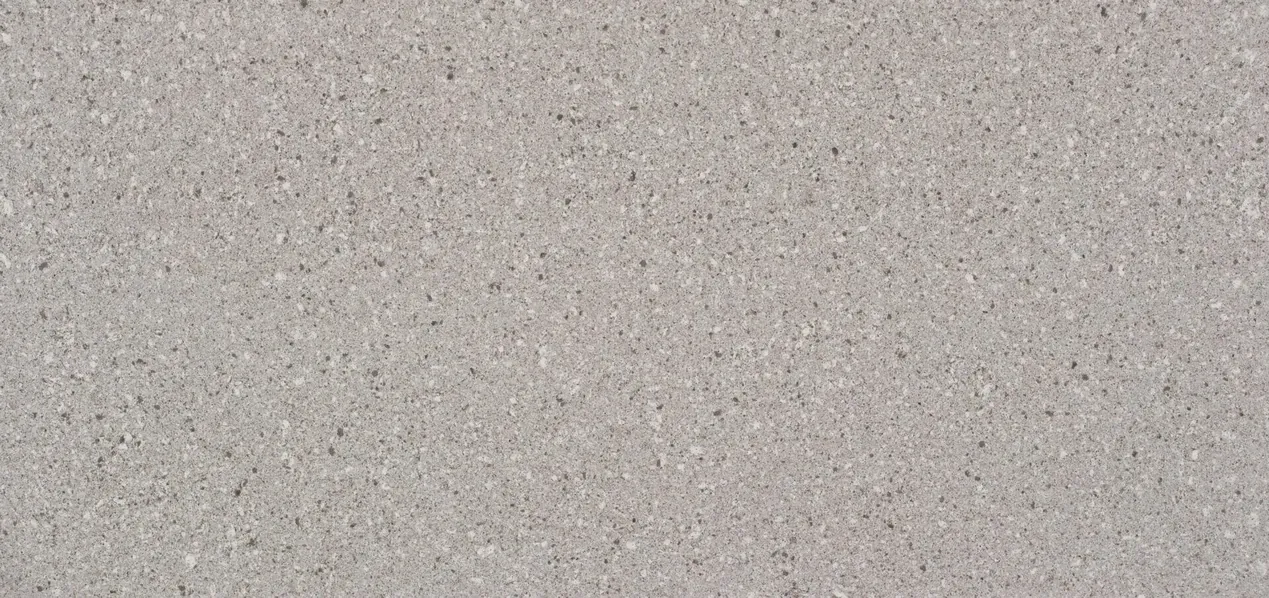

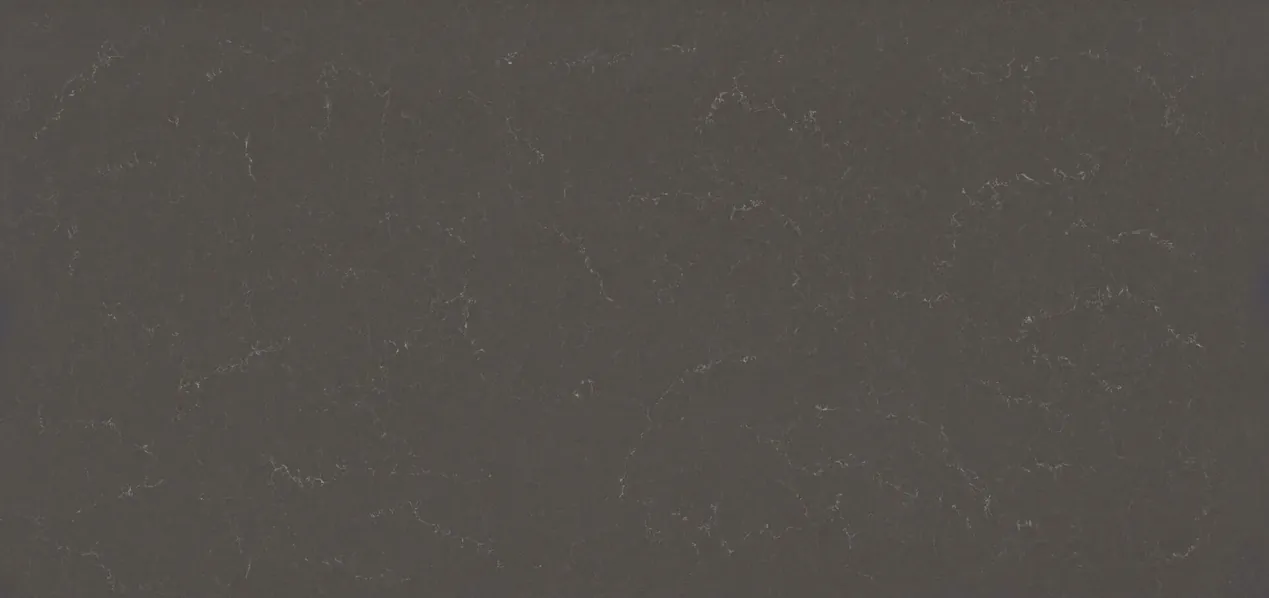
What a mineral surface is
A “mineral surface” label tells you less than the composition does. OSHA and NIOSH’s countertop alert, as AIHA summarizes it, describes products by what they contain, not by marketing name. It mentions engineered stone with less than 50% crystalline silica, and products made from recycled glass, pigments and a Portland cement matrix with less than 0.2%. The label alone does not show where a particular product falls, and “low silica” is defined differently in different documents. Our silica guide covers the thresholds.
How it differs from quartz and porcelain
The differences come down to what the material is made of and what holds it together. Quartz is crushed natural quartz bound with polymer resin, and porcelain is a fired ceramic. A mineral surface may use a different filler, a different binder, or both, and category names can overlap, so one swatch may be sold under more than one name. Care and heat limits depend on the product, so read its care sheet instead of assuming it behaves like quartz or porcelain.
Questions to ask the manufacturer
Ask for documents, not adjectives. These six requests cover most of what the label leaves out.
- The safety data sheet (SDS) for the exact color. Section 3 lists hazardous ingredients with their concentration or range, unless a trade-secret claim applies.
- What any “silica-free” label or asterisk means, and how it was tested.
- What binds the material (resin, cement or something else) and what the filler is.
- For any recycled-content claim: whether it is pre-consumer or post-consumer, and what share of the product it is.
- How and where the slab will be cut and finished, and how dust is controlled.
- The care sheet, including heat limits, cleaners, sunlight and warranty terms.
Lower silica is one layer of protection
Choosing a product with little or no crystalline silica is the first step in OSHA and NIOSH’s hierarchy of controls, not the only one. The alert still lists wet cutting or local exhaust ventilation, finishing in the shop instead of on site, and respirators if exposure stays above the limit.
Frequently asked questions
Is a mineral surface the same as quartz?
Not necessarily, and some products are labeled both ways. What counts is the composition on the SDS: the filler, the binder and the crystalline silica content.
What should I ask about a green or eco label on a surface?
Ask which specific benefit is meant, such as recycled content or a third-party certification, and ask for the paperwork behind it. The FTC’s Green Guides caution marketers against unqualified general environmental benefit claims.
Is a finished mineral countertop a hazard in my home?
The OSHA and NIOSH alert addresses workers who manufacture, finish and install countertops, and the risk it describes comes from dust during cutting and finishing. That is why composition and how your slab is fabricated both matter.
Keep reading
 Quartz surfacesQuartz surfaces for countertops and backsplashes, chosen together with your cabinetry.Read more
 Porcelain countertopsLarge-format porcelain countertop surfaces for kitchens in Southwest Florida. Browse the colors.Read more
 Porcelain vs quartz vs other countertops: what about silica?Crystalline silica is mainly a worker-safety issue that starts in the fabrication shop. Here is what OSHA and NIOSH say about each material, and what…Read more
 Stone surfacesQuartz, mineral and porcelain surfaces for countertops and backsplashes.Read more
Sources
- AIHA: OSHA, NIOSH urge countertop fabrication shops to adopt silica controls (summary of the 2026 alert)
- OSHA and NIOSH Hazard Alert: Worker Exposure to Silica during Countertop Manufacturing, Finishing, and Installation (NIOSH Publication 2026-101, updated Feb. 26, 2026)
- OSHA Hazard Communication Standard, Appendix D: Safety Data Sheets
- 16 CFR 260.4, FTC Green Guides: General environmental benefit claims
- 16 CFR 260.13, FTC Green Guides: Recycled content claims