On this page
Which kitchen sink material is best?How thick should a stainless steel sink be?How do quartz composite sinks compare?Single bowl, double bowl or 60/40?How deep should a kitchen sink be?Undermount, drop-in or apron-front: which fits your countertop?How much cabinet and counter space does a sink need?A short checklist before you orderFrequently asked questionsKey takeaways
- No material wins on every count. Stainless steel is lighter and forgiving, quartz composite has color all the way through, and cast iron and fireclay are heavy enough to need reinforced cabinets.
- For stainless, a lower gauge number means thicker steel. This Old House says most kitchen sinks use 16-gauge. Consumer Reports found gauge had little to do with performance, so also ask about underside pads or coatings.
- Undermount sinks need a waterproof countertop, drop-in sinks work with any material, and apron-front (farmhouse) sinks need the cabinet front cut to fit.
- Most bowls are 6 to 12 inches deep. The quartz sinks on our sinks page are listed at 9 to 9½ inches.
- Pick the sink before the cabinet is final, and leave the landing space NKBA recommends: 24 inches on one side of the sink and 18 inches on the other.
Which kitchen sink material is best?
No single material is best. Stainless steel and quartz composite are the two most common choices, and the right one depends on how you cook, how you clean and what look you want. Published guides agree on the broad strokes.
| Material | What published sources say | Watch for |
|---|---|---|
| Stainless steel | Resists scratches, stains and corrosion and is lighter than cast iron or fireclay (This Old House). | Thin steel can dent. Near the coast, tea staining can appear. |
| Quartz composite | Crushed stone, often quartz, bound with resin, with color through the material so minor scratches are less noticeable (This Old House, composite sinks). | Follow the maker’s care sheet. Heat ratings differ by model. |
| Enameled cast iron | Glossy, chip-resistant enamel on iron. Large sinks can weigh 200 pounds or more. | Needs reinforced cabinets. Damaged enamel can let the metal rust. |
| Fireclay | Durable, and it resisted stains, scouring and heat in Consumer Reports’ tests. | Cracked severely under a 5-pound weight drop in that test. Heavy. |
| Solid surface or acrylic | Can be made to match a countertop of the same material. | Heat was a problem for solid surfacing, and a hot pot melted an acrylic sink (Consumer Reports). |
Consumer Reports updated its guide in March 2016 and is no longer testing sinks, so treat its test results as older evidence. Our sinks page lists quartz sinks as a single-bowl undermount workstation kit, an apron-front farmhouse, a 60/40 undermount and an offset double-bowl drop-in.
How thick should a stainless steel sink be?
Gauge measures steel thickness, and a lower number means thicker steel. This Old House says most kitchen sinks use 16-gauge steel and cheaper models use 18 or 20, and that thicker steel helps prevent dents from dropped pans. Consumer Reports found gauge had little to do with performance, and found that sinks with sound-absorbing pads on the underside were quieter than sinks with only a spray coating.
So ask for the gauge, the grade of steel and the underside treatment in writing. Near the coast, also ask how the finish handles salt air: the World Stainless Association says tea staining has been reported in domestic and coastal settings, primarily affects appearance, and is linked to grade, surface finish and cleaning. Our guide to coastal and humid kitchens covers salt and moisture.
How do quartz composite sinks compare?
A quartz composite sink is made of crushed stone, often quartz, bound with resin, so the color runs through the material. Its care rules differ from stainless. Makers describe the surface as heat-, scratch-, stain- and fade-resistant, but ratings differ by model. Those are manufacturer claims, not independent tests, and we did not find an independent noise or heat comparison. Countertop quartz and quartz composite sinks are different products with different resin systems and ratings; use the rating for the exact model.
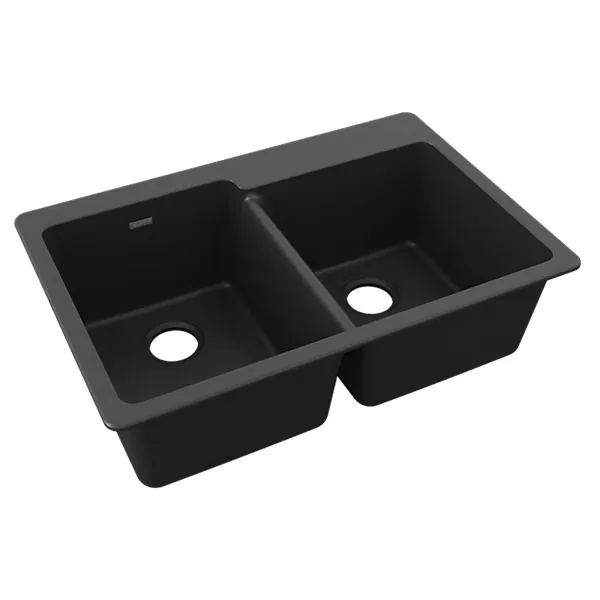
Whatever the material, clean the sink with mild detergent and a soft cloth, avoid steel wool and wire brushes, and follow the care sheet for your model. As a general precaution, keep open bleach, acid and drain cleaners out of the sink base, and check the care sheet for what your sink’s maker advises.
Single bowl, double bowl or 60/40?
Choose a single bowl if you wash large pots and baking sheets, and a double bowl or 60/40 split if you like to soak on one side and rinse on the other. Consumer Reports warns that the narrower side of a double bowl may not fit big cookware, so confirm that one bowl is wide enough. This Old House calls double-basin sinks the most popular and single basins the more budget-friendly.
Workstation kits add a ledge and fitted accessories, so check what is in the box. An offset drain can free more room in the cabinet below, which matters if you plan a pull-out waste bin there.
How deep should a kitchen sink be?
Most kitchen bowls are 6 to 12 inches deep. A deeper bowl hides dishes and cuts splashing, but a very deep one is harder to reach into. Consumer Reports gives that range and notes that an undermount sits up to 1½ inches lower than a top-mounted sink. This Old House suggests about 10 inches to limit splashing. The quartz models on our sinks page are listed at 9 and 9½ inches.
Undermount, drop-in or apron-front: which fits your countertop?
Undermount gives the cleanest wipe-down but needs a waterproof countertop. Drop-in works with any countertop. Apron-front is the hardest to fit. Consumer Reports says topmount sinks work with any countertop material and are simpler and cheaper to install, though grime can collect at the lip. Undermounts have no lip but cost more to buy and install. This Old House adds that switching to an undermount calls for a solid-surface countertop, and that apron-front sinks are often harder to install because the cabinet front is cut and scribed to the apron.
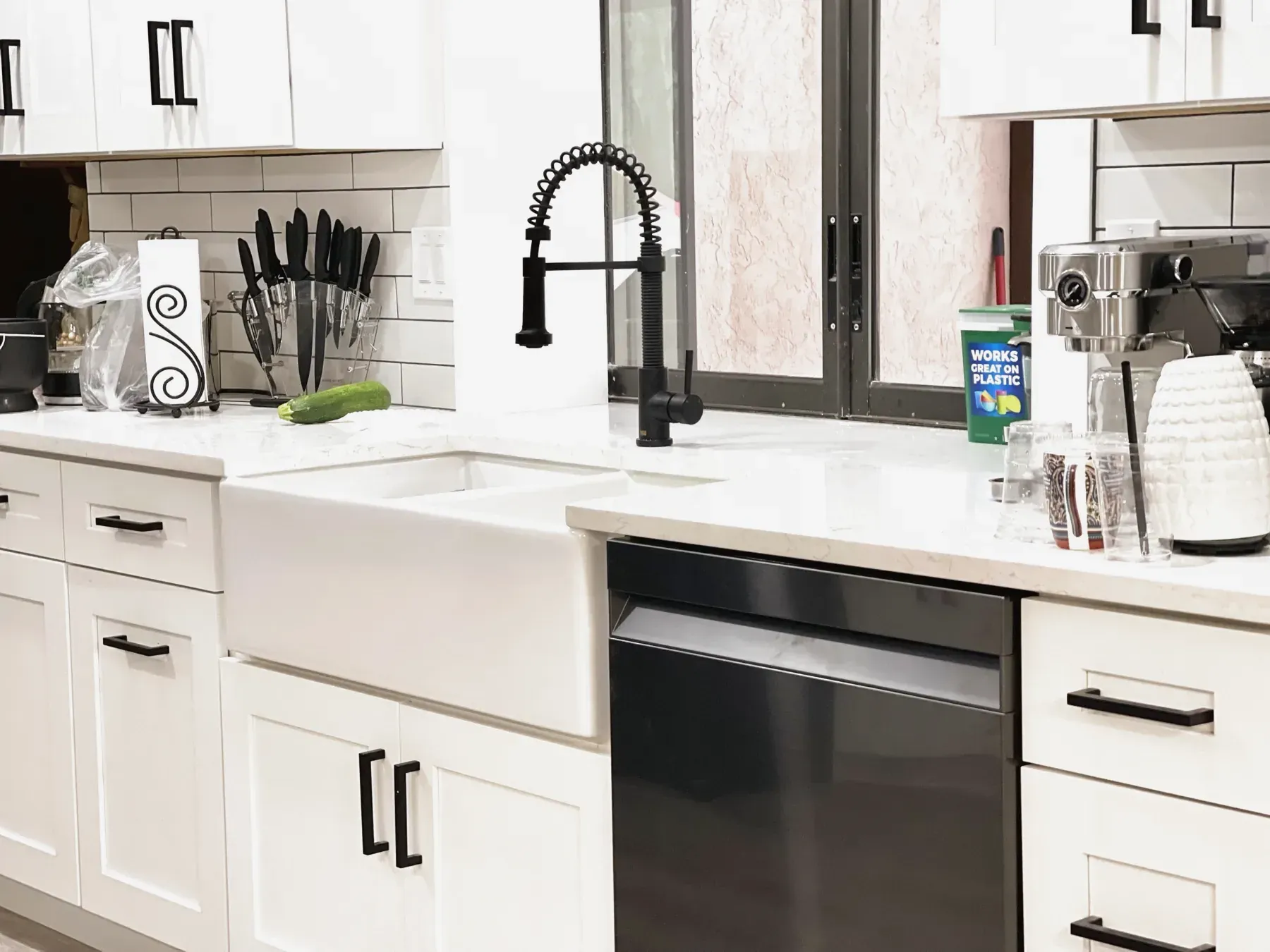
The warranty is part of compatibility. Some sink warranties limit which countertop materials and mounting styles they cover, so ask for the current warranty and read it against your countertop material before you order.
How much cabinet and counter space does a sink need?
Start with the spec sheet’s minimum cabinet size, then check the counter beside the sink. NKBA recommends at least 24 inches of landing area on one side and 18 inches on the other. NKBA counts landing area as countertop next to a sink or appliance that is at least 16 inches deep and 28 to 45 inches above the floor.
Measure the real sink. This Old House notes that actual measurements can vary slightly from the spec sheet and that a 36-inch cabinet may not hold a 36-inch sink, so it advises choosing the sink first and then ordering the cabinet. Sink makers publish a minimum cabinet size on the spec sheet, so check it. Weight counts too: a disposal, water and heavy cookware can put roughly twice the sink’s shipping weight on the base cabinet. Ask your cabinet maker how the sink base will be built to carry it. Our cabinetry pages list the box construction.
A short checklist before you order
Settle mounting, specs, faucet fit and cabinet size before the order goes in.
- 01
Pick mounting and countertop together
Decide undermount, drop-in or apron-front along with the countertop material.
- 02
Get the spec sheet in writing
Dimensions, minimum cabinet size, gauge or composite description, drain position and warranty terms.
- 03
Check the faucet fit
Hole count and spout reach. See our kitchen fixtures and the faucet buying guide.
- 04
Confirm the cabinet
Settle base cabinet size, reinforcement and landing space before cabinets are ordered.
Frequently asked questions
Is a quartz composite or a stainless steel sink right for me?
Neither wins on every count. Stainless steel is lighter and well proven. Quartz composite has color through the material and is sold as nonporous, but it has its own care sheet and a heat rating that varies by model. Choose by how you use the sink and the look you want.
What gauge should a stainless steel kitchen sink be?
A lower gauge number means thicker steel. This Old House says most kitchen sinks use 16-gauge, with cheaper ones at 18 or 20. Ask for the gauge in writing, and ask about sound-dampening pads.
Can I put hot pans in a quartz composite sink?
Check the rating and care sheet for your exact model. Treat any rating as a safety margin, not permission to set a pan straight off the burner. Countertop quartz and quartz composite sinks are different products with different ratings.
Do I need a special countertop for an undermount sink?
Consumer Reports says undermount sinks should be used with a waterproof countertop. Also read the sink’s warranty, which may limit the countertop materials it covers.
Keep reading
 Premium sinksA stunning selection of high-demand quartz sinks in a wide variety of sizes, depths and configurations.Read more
 How to choose a kitchen faucet: type, flow, finish and fitA faucet is the fixture you touch most. Here is how to choose a type, check flow and finish, make sure it fits your sink, and what to ask about the…Read more
 Storage systemsSpice pullouts, cutting board slots, knife blocks and other custom storage solutions.Read more
Sources
- This Old House: All About Farmhouse Sinks (updated May 26, 2026; composite sinks and mounting)
- This Old House: The 5 Best Kitchen Sinks (updated June 18, 2026)
- Consumer Reports: Sink buying guide (updated March 25, 2016; no longer testing sinks)
- NKBA: Kitchen Planning Guidelines with Access Standards (sink landing area)
- World Stainless Association: Understanding Corrosion, Chapter 4: Tea staining