On this page
Which pull-outs and organizers are worth paying for?Are waste and recycling pull-outs worth it?Do blind-corner pull-outs work?Are deep drawers better than base cabinets with shelves?How much weight can a pull-out or drawer hold?What about moisture and the sink base?How to decide what to buyFrequently asked questionsKey takeaways
- Pay for storage where you reach every day and where plain cabinets are hard to use: waste and recycling, blind corners, and deep drawers or pull-outs near the sink and cooktop.
- NKBA recommends at least two waste receptacles, one near the sink and one for recycling, and at least one corner cabinet with a functional storage device.
- Hardware has a rated load. One drawer-system maker lists 40 and 70 kg classes. Add up the bin, pots or jars you plan to load and ask for the rating of the exact length and version.
- The sink base is the wettest cabinet. Fix leaks quickly, dry anything wet within 24 to 48 hours, and keep open bleach and drain cleaners out of it.
- Plan pull-outs with the cabinets. They need specific box widths, openings and clearances.
Which pull-outs and organizers are worth paying for?
The ones that fix a daily annoyance: a waste and recycling pull-out, a working blind-corner unit, and deep drawers or pull-outs for pots and pans. Inserts for things you reach for rarely are the first to cut. The National Kitchen & Bath Association (NKBA) says storage and organizing items can add capacity to wall, base, drawer and pantry storage and should be chosen to meet the user’s needs. Its access standard also suggests keeping frequently used items between 15 and 48 inches above the floor.
NKBA’s planning guidelines also set minimum amounts of shelf and drawer frontage by kitchen size, with a share of it within 72 inches of the center of the main sink. So spend first on the zone around the sink, and next on the cooktop and prep area.
| Item | Worth it when | Skip or downsize when | Check before ordering |
|---|---|---|---|
| Waste and recycling pull-out | Almost always. NKBA recommends two receptacles. | Never skip entirely. Downsize in a narrow cabinet. | Bin capacity, cabinet width, rated load |
| Blind-corner pull-out or lazy Susan | The corner would otherwise be dead space. | The layout has no blind corner. | Opening size, door swing, shelf rating |
| Pull-out base organizer with utensil bins | A narrow base cabinet sits by the range or prep area. | A drawer would fit in the same spot. | Cabinet width, rated load |
| Deep drawers for pots and pans | You cook daily and own heavy cookware. | You rarely use many pots. | Slide load rating, drawer depth |
| Spice drawer insert or pull-out | You use many seasonings. | You use a handful of jars. | Drawer height, jar sizes |
| Cutlery tray, peg system | You want dividers sized to your own dishes and utensils. | Your drawers hold few items. | Insert dimensions |
| Knife storage | Counter space is tight. | A countertop block already works for you. | Where you do most of your cutting |
| Pull-out pantry | A tall, narrow cabinet can serve as a pantry. | You have a walk-in pantry. | Full-load weight, rated load |
Are waste and recycling pull-outs worth it?
Yes, for almost every kitchen. NKBA recommends at least two waste receptacles: one near each cleanup or prep sink and a second for recycling, in the kitchen or nearby. Our storage systems page shows hidden waste and recycling pull-outs, including steel, aluminum and wood waste containers and a single 30-quart bottom-mount container. Hardware ratings vary by maker. Check how many bins fit your cabinet width, whether a bin lifts out for washing, and where the unit sits relative to the sink and prep surface.

Do blind-corner pull-outs work?
They do when the corner cabinet would otherwise be hard to reach. NKBA recommends that at least one corner cabinet include a functional storage device. The storage systems page shows a kidney-shaped lazy Susan for blind corner cabinets, a half-moon maple Susan and a corner optimizer. These units need a specific cabinet opening and a door that swings clear of them, so ask for the minimum opening and the shelf weight rating before you commit.
Are deep drawers better than base cabinets with shelves?
For heavy items you use daily, drawers are often the better fit, because the whole contents are in view and within reach. But a kitchen needs both. NKBA’s storage guidance counts base shelves and drawers separately, so the real question is the mix. Our cabinetry includes full-extension drawer systems and custom interior organization, such as pull-out pantries and hidden waste and recycling.

How much weight can a pull-out or drawer hold?
Check the manufacturer’s rated load for the exact length and version, and compare it with the heaviest thing you will put in it. Blum’s LEGRABOX page describes dynamic carrying capacities of 40 and 70 kg, about 88 and 154 pounds, without saying which variant gets which figure. A full waste bin or a drawer of cast-iron pans can use much of that. The industry standard for cabinet hardware, ANSI/BHMA A156.9, covers operational, cycle and strength tests, but the public summary does not list drawer-slide grades or loads. Ask the supplier for the rating of the specific part rather than a general claim.
What about moisture and the sink base?
The sink base is the hardest cabinet to organize, because it holds the supply lines and drain and is the most likely place for a leak. The EPA says to fix plumbing leaks as soon as possible and to dry water-damaged areas and items within 24 to 48 hours to prevent mold. Chemicals matter too: keep open bleach, acid and drain cleaners out of the sink base, because their vapors can corrode metal parts, and check your sink’s care sheet.
Humidity is a second factor in Florida. A cabinet manufacturer’s humidification guide says coastal and other humid homes may see 70 to 80 percent indoor humidity, which can swell cabinet joints, and that these reactions are normal, not a defect. The EPA recommends keeping indoor humidity below 60 percent, ideally 30 to 50 percent. Wood organizers such as the maple units on our storage page are fine in dry zones, but ask how they are finished before you put them under the sink. Our guide to humid and coastal kitchens explains more, and the sink guide covers how an offset drain can free room in that cabinet.
How to decide what to buy
List what you use daily, place it where you use it, and spend first on the items you reach for most.
- 01
List what you reach for every day
Trash, recycling, pots, cutting boards, spices, knives.
- 02
Place each item where you use it
Near the sink, the cooktop or the prep surface, and between 15 and 48 inches above the floor if it is used often.
- 03
Rank by frequency
Waste and recycling first, then pots and pans, then corners, then small inserts.
- 04
Match items to cabinet widths
Interior fittings need specific box widths and clearances, so plan them with the cabinets rather than after.
- 05
Ask for the rating and the warranty
Rated load for the exact part, and what the warranty covers.
Frequently asked questions
Are pull-out pantries worth it?
They can be, when a tall, narrow cabinet is the only pantry space you have. Ask for the rated load and the full-load weight of what you plan to store, and confirm the opening and clearances before ordering.
How many trash and recycling bins do I need?
NKBA recommends at least two waste receptacles: one near the main cleanup or prep sink and a second for recycling, either in the kitchen or nearby.
Can I put organizers in the cabinet under the sink?
Yes, but keep the cabinet dry and leak-checked. The EPA advises drying water-damaged items within 24 to 48 hours, and it is wise to keep open bleach, acid and drain cleaners out of the sink base because their vapors can corrode metal parts.
Can pull-outs be added to cabinets I already have?
Sometimes. It depends on the opening width, the door and drawer clearances and how the unit mounts. A measured check is the only reliable answer.
How much do kitchen storage systems cost?
Prices depend on the product, size and hardware, and we do not publish a price range here. Ask for each item priced separately so you can decide what to keep.
Keep reading
 Storage systemsSpice pullouts, cutting board slots, knife blocks and other custom storage solutions.Read moreCabinetryShaker, slim shaker, high gloss and matte slab cabinetry.Read more
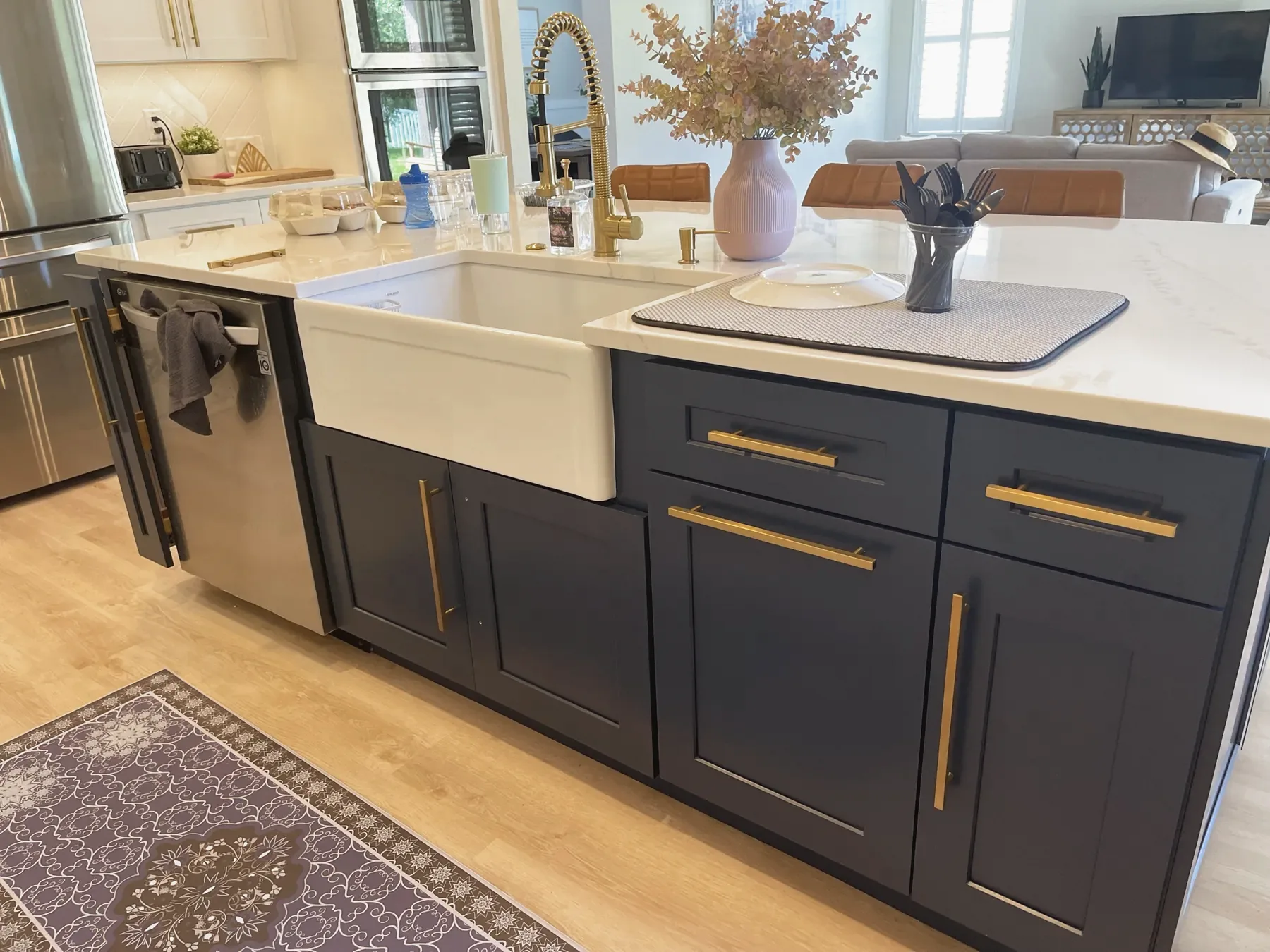 Kitchen sink guide: quartz composite vs stainless steel and other materialsMaterial, depth, bowl layout and mounting style decide how a sink works years from now. Here is how to compare them before the countertop is cut.Read more
Sources
- NKBA: Kitchen Planning Guidelines with Access Standards (waste receptacles, storage, corner cabinet storage)
- Blum: LEGRABOX box system overview (load capacities)
- BHMA: ANSI/BHMA A156.9-2026 Cabinet Hardware (summary)
- EPA: A Brief Guide to Mold, Moisture, and Your Home
- National cabinet maker: humidification guide for cabinets