On this page
When is hurricane season, and when is the risk highest?Should you avoid remodeling during hurricane season?Which stages are most exposed to a storm?How do you protect materials on site?What insurance and paperwork should you check?What should you settle with your contractor before you sign?Frequently asked questionsKey takeaways
- The Atlantic hurricane season runs from June 1 to November 30. The National Hurricane Center puts the peak at September 10, with most activity between mid-August and mid-October.
- Hurricane watches are issued 48 hours before tropical-storm-force winds are expected, and warnings 36 hours before. Deliveries and open-wall stages inside that window are the first to move.
- A kitchen is mostly interior work, so you rarely need to avoid the season. Plan buffer days, decide where materials will be stored and agree in writing who secures the site.
- Before work starts, read your policy. The hurricane deductible is on the declarations page, most homeowners policies do not cover flood, and a new flood policy typically takes 30 days to take effect.
- Settle the storm clause, material storage and payment schedule with your contractor before you sign.
When is hurricane season, and when is the risk highest?
The Atlantic hurricane season runs from June 1 to November 30, and the National Hurricane Center (NHC) puts its peak at September 10. Most activity falls between mid-August and mid-October. NHC’s 1991–2020 averages are 14 named storms, 7 hurricanes and 3 major hurricanes a season. The first named storm typically forms around June 20, the first hurricane around August 11 and the first major hurricane around September 1. NHC cautions that individual seasons can vary considerably from those dates. NWS Tampa Bay adds that systems outside the season are relatively rare and that storm surge poses the greatest threat to life and property for coastal residents.
That makes the season a long window, six of every twelve months, rather than a short one. Our guide to humid and coastal kitchens covers what storm water, salt and humidity do to kitchen materials.
Should you avoid remodeling during hurricane season?
Usually not. A kitchen remodel is mostly interior work, so the practical goal is a schedule that can absorb a storm threat, not one that avoids the calendar. What changes in season is the chance that work pauses for several days while a system approaches. The National Hurricane Center issues a hurricane watch 48 hours before it expects tropical-storm-force winds and a hurricane warning 36 hours before, to give you time to finish preparing. Any delivery, demolition or installation day inside that window may have to move.
So build in float and keep it visible. Our kitchen remodel timeline shows the other clocks already running alongside it, including permits and cabinet and stone lead times, and a storm pause stacks on top of them.
Which stages are most exposed to a storm?
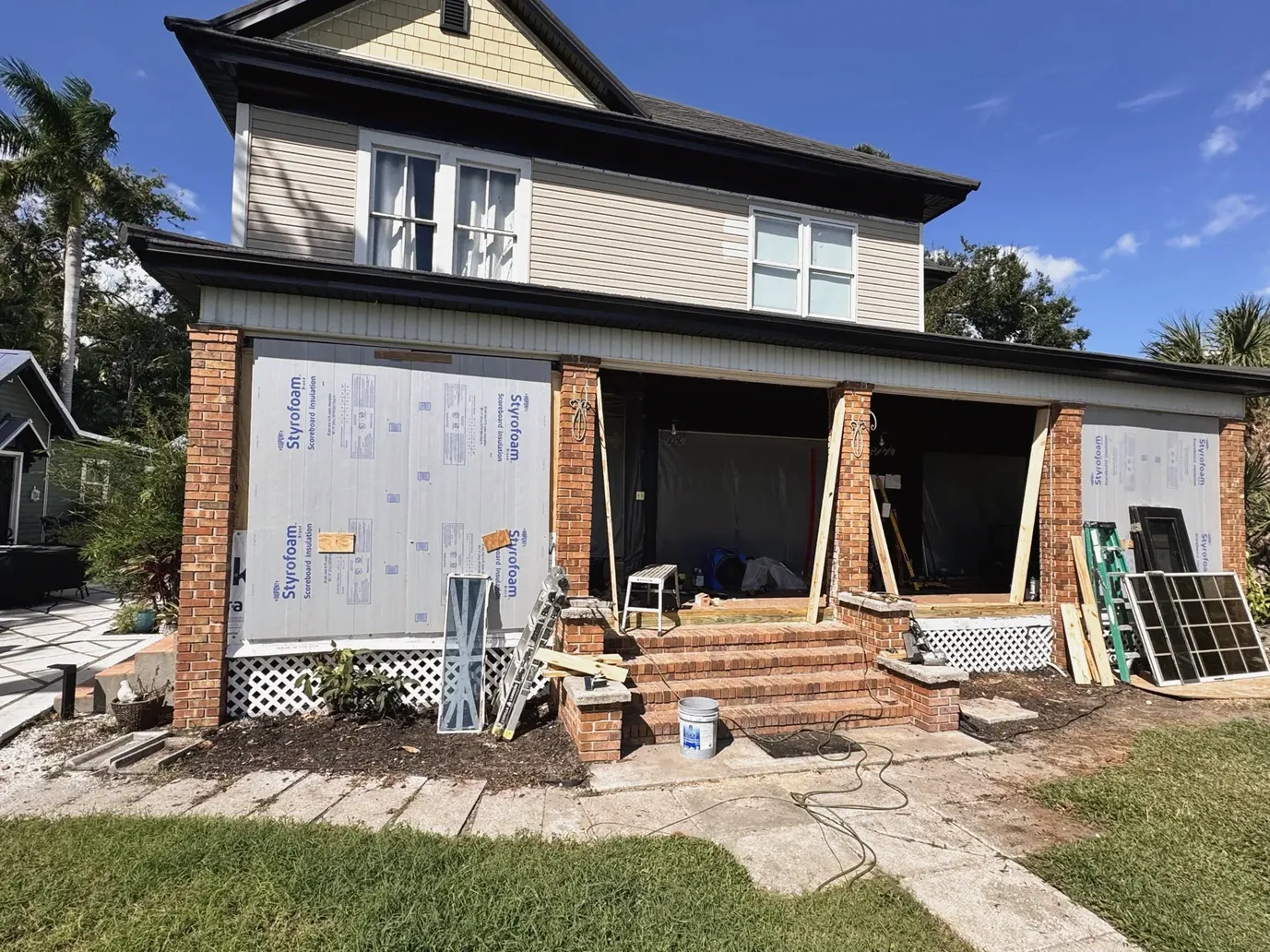
The stages with open walls, open exterior openings or stockpiled materials are the most exposed. Installation and finishing are less exposed, but they wait on everything before them.
| Stage | Why a storm matters | Question to ask |
|---|---|---|
| Ordering and delivery | A watch or warning can disrupt deliveries and installation crews. | Do you have written ship dates from suppliers, and what happens to the schedule if one slips? |
| Demolition and rough-in | Open walls and exposed exterior openings let water in. The EPA says water-damaged areas and items should be dried within 24 to 48 hours to prevent mold (general guidance, not mold-remediation advice). | Who closes or covers openings before a watch, and who dries anything that gets wet? |
| Materials stored on site | A cabinet manufacturer says coastal homes may reach 70 to 80 percent humidity, which swells cabinet joints, and recommends storing and installing in a controlled, temperate space. The EPA recommends keeping indoor humidity below 60 percent. | Where will cabinets, stone and appliances wait, and who is responsible until they are installed? |
| Installation and finish | Lower exposure indoors, but the sequence stalls if earlier stages slip. | How will a new schedule be communicated in writing? |
How do you protect materials on site?
Keep cabinets, stone and appliances in a dry, temperate space whenever possible, and agree in writing who moves or covers them when a watch is issued. The cabinet manufacturer’s guide recommends letting cabinetry acclimate for a few days before installation and finishing wet trades such as drywall taping and concrete first, because they add moisture. Practical points to settle:
- Where. Ask for an indoor, dry storage spot and whether materials will be kept off the floor and away from exterior walls and windows.
- When. Ask whether deliveries can be held back when a storm looks likely, rather than received into an open site.
- Who. Ask who is responsible for stored materials before installation and who moves them.
- Proof. Take dated photos of stored materials and of the site at the end of each work day.
In a mapped flood zone, material choice matters as much as storage. Our coastal kitchens guide covers how FEMA’s flood-resistant materials guidance treats cabinets.
What insurance and paperwork should you check?
Read your policy before work starts: find the hurricane deductible, check whether flood is covered, and keep dated photos of the kitchen before, during and after the remodel. The Florida Department of Financial Services advises reviewing your policy and coverage limits and considering a higher limit if it no longer reflects your home’s current value, ideally with your agent before the June 1 start of the season. It also advises dated photos or videos, an itemized list of belongings, receipts for big-ticket items, and keeping insurance and financial papers where you can reach them quickly.
Hurricane losses can carry a separate deductible, and the amount is shown on your declarations page; the Florida Department of Financial Services explains how it works. The state also says policyholders should file claims even when repairs cost less than the deductible, so the insurer has a record.
Flood is separate. FEMA says most homeowners insurance does not cover flood damage and that there is typically a 30-day waiting period before a National Flood Insurance Program policy takes effect, so waiting for a watch is too late. After storm damage, the state’s advice is not to sign anything before calling its Insurance Consumer Helpline; the number is on the Department of Financial Services site. Your agent can explain your own policy.
What should you settle with your contractor before you sign?
Get the storm plan, material storage and payment terms in writing before you sign.
- A storm clause. What happens to the schedule when a watch or warning is issued for your county? Who secures the site, and how is the restart date confirmed in writing?
- Buffer days. Does the schedule include float during the season, and at which stage?
- Material storage and risk. Where do cabinets and stone wait, and who is responsible for them until they are installed?
- Supplier ship dates. Ask for them in writing, and ask what happens if a delivery is rescheduled.
- Payments. Hillsborough County advises homeowners to get a written contract and not to pay more than 10 percent of the job total before work starts. Tie later payments to completed work.
- License and insurance. Verify the contractor of record before you sign. See how to check a Florida contractor license.
- A contact. Name the person who answers when a storm is forecast.
Our kitchen remodeling page describes how a turnkey project is organized.
Frequently asked questions
When is hurricane season in Florida?
The Atlantic hurricane season runs from June 1 to November 30. The National Hurricane Center puts the peak at September 10, and NWS Tampa Bay places the most active period from about mid-August to mid-October.
Is it a bad idea to start a kitchen remodel during hurricane season?
Not necessarily. Kitchen work is mostly interior. Plan buffer days, decide where materials will be stored and agree who secures the site if a storm approaches.
How much warning do we get before a hurricane?
The National Hurricane Center issues hurricane watches 48 hours before tropical-storm-force winds are expected and hurricane warnings 36 hours before.
Does homeowners insurance cover flood damage?
FEMA says most homeowners insurance does not. Flood coverage is separate, and an NFIP policy typically takes 30 days to take effect.
What is a hurricane deductible?
It is a separate deductible, often a percentage of the dwelling limit, that applies to hurricane losses. The amount is on your declarations page, and the Florida Department of Financial Services explains the rules.
What should I do with cabinets and stone delivered before installation?
Keep them dry and in a temperate space, off the floor if possible, and agree in writing who is responsible and who moves them if a storm is forecast.
Keep reading
 How long does a kitchen remodel take? Phases and what controls the scheduleA kitchen remodel runs on several clocks at once: decisions, permits, manufacturing and site work. Here is the order of the phases and what really…Read more
 Kitchens in humid and coastal Florida homes: what salt and moisture doHumidity, salt and storm water each stress a kitchen in a different place. Here is where they hit, and how to choose materials that hold up.Read more
 Turnkey kitchen remodeling from Venice to TampaCustom cabinetry, stone surfaces and structural remodeling, led by one contractor from the 3D layout to the final inspection.Read more
Sources
- NOAA National Hurricane Center: Tropical cyclone climatology
- NWS Tampa Bay: Tropical weather
- National Weather Service: Hurricane and tropical storm watches and warnings (NHC issues watches and warnings)
- Florida Department of Financial Services: Hurricane Ready
- Florida Department of Financial Services: Florida’s hurricane deductible
- FEMA: Flood insurance
- FEMA: Waiting period for activating a flood policy
- EPA: A Brief Guide to Mold, Moisture, and Your Home
- National cabinet maker: humidification guide for cabinets
- Hillsborough County: Selecting a Contractor